
What is biological fitness? Biological fitness is a measure of an organism’s ability to survive and reproduce in its environment. Why is survival not enough to describe biological fitness? Survival alone isn’t enough because it doesn’t account for the crucial element of passing on genes to the next generation.
In the grand theater of life, survival might seem like the ultimate victory. A creature navigates the perils of its world, evades predators, finds food, and simply keeps going. This organismal persistence is undoubtedly a vital component of life. However, when we delve into the scientific concept of biological fitness, survival is just one act in a much larger play. To truly understand biological fitness, we must look beyond mere existence and embrace the concept of reproductive success.
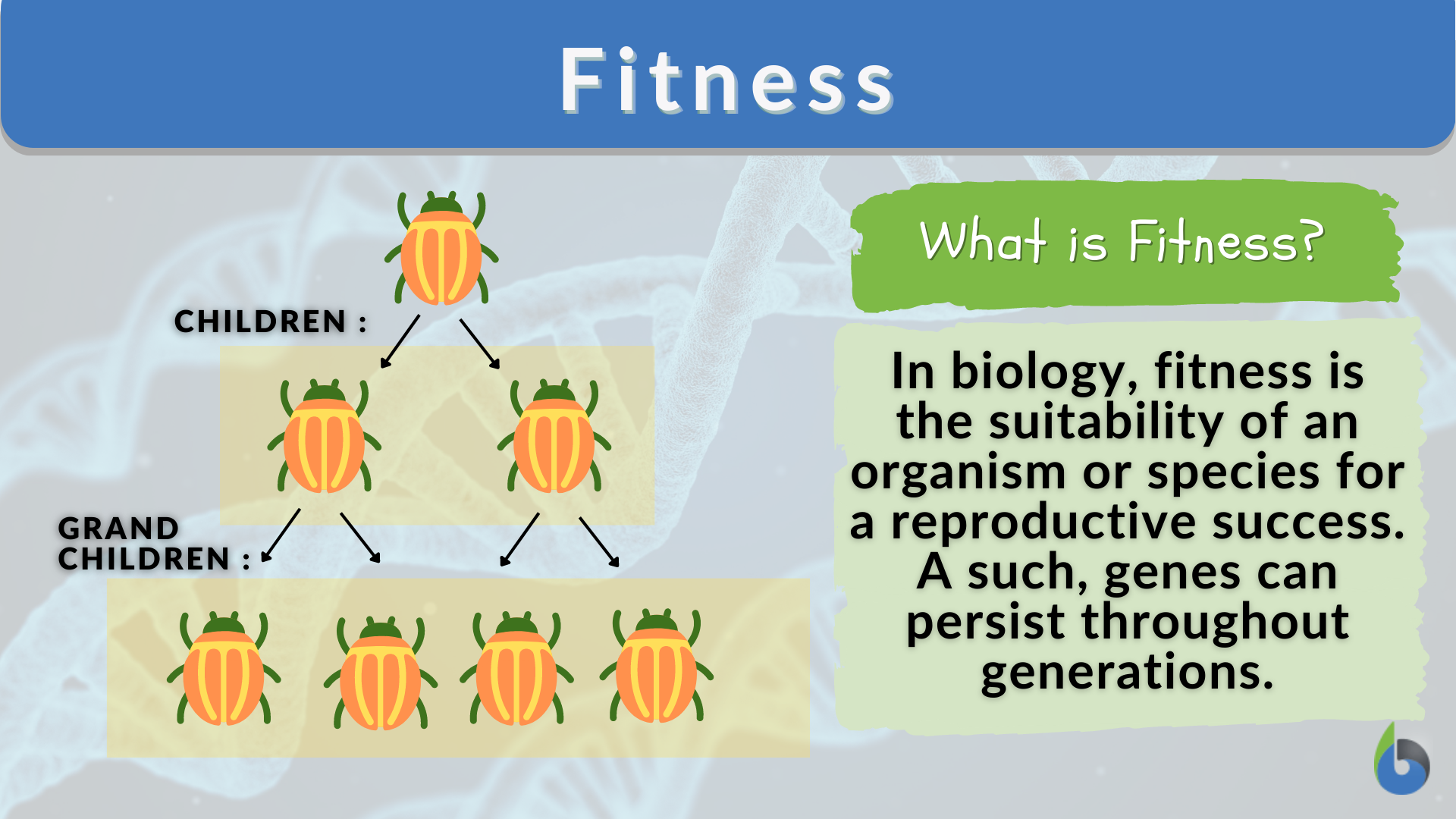
Image Source: www.biologyonline.com
The Core of Fitness: Passing the Baton
At its heart, biological fitness is about a species’ ability to continue existing across generations. This continuity is achieved not by an individual living forever, but by that individual successfully reproducing. Think of it like a relay race. The runner who simply holds onto the baton without passing it on, no matter how strong or fast they are, doesn’t win the race for their team. The winner is the one who not only completes their leg but also successfully hands the baton to the next runner. In the biological world, that baton is made of genes, and the race is the continuation of the species.
This idea is fundamental to natural selection, the driving force behind evolution. Natural selection favors traits that increase an organism’s chances of surviving and reproducing. If a trait only helps an organism survive but hinders its ability to have offspring, it won’t become more common in the population over time. Conversely, a trait that might even slightly reduce an individual’s lifespan but significantly boosts its reproductive output will be strongly favored by natural selection.
Reproductive Success: The True Measure
So, what does reproductive success truly encompass? It’s a multifaceted concept that goes beyond simply having offspring. It includes several key components:
- Number of Offspring: Producing a large number of offspring can increase the chances that some will survive to reproduce themselves.
- Offspring Viability: It’s not just about quantity; it’s also about quality. Offspring viability refers to the likelihood that those offspring will survive to maturity and be able to reproduce. A parent with many offspring that all die before they can breed contributes less to the gene pool than a parent with fewer offspring who all grow up and have their own families.
- Reproductive Timing: When an organism reproduces can also be important. Early reproduction might allow for more breeding cycles within a lifetime.
- Mate Quality: Finding a good mate can also enhance reproductive success. A mate might provide good genes, resources, or protection for the offspring.
An organism that lives a long life but produces no offspring has zero biological fitness. On the other hand, an organism that has a shorter lifespan but produces many viable offspring that themselves reproduce has high biological fitness. This is the essence of differential reproduction – the idea that some individuals in a population will have more offspring than others because they possess traits that make them better suited to their environment.
Survival Advantage vs. Evolutionary Advantage
While survival is a prerequisite for reproduction, a survival advantage doesn’t automatically translate into an evolutionary advantage. An evolutionary advantage is conferred by traits that increase an organism’s ability to pass on its genes.
Consider these scenarios:
- The Lone Survivor: A gazelle is incredibly fast and agile, allowing it to evade lions consistently. It lives a long, solitary life but never finds a mate. Its survival is excellent, but its genetic contribution to the next generation is zero. Its biological fitness is effectively zero.
- The Prolific Parent: Another gazelle is slightly less agile and is occasionally injured by predators. However, it is highly attractive to potential mates, boasts strong parental care instincts, and produces many healthy fawns that grow up to reproduce. This gazelle might have a shorter lifespan than the solitary survivor, but its reproductive success is far greater. Its biological fitness is high.
This highlights a critical distinction: organismal persistence (simply staying alive) is not the same as evolutionary success. The latter is measured by the success of one’s genes in the ongoing story of life.
Traits That Matter Most
What kinds of traits contribute to biological fitness? They are diverse and context-dependent, but generally, they are those that enhance reproductive success:
- Finding Mates: Traits like bright plumage in birds, elaborate antlers in deer, or complex courtship songs in frogs increase an individual’s attractiveness to potential mates.
- Successful Mating: Traits that ensure successful fertilization, such as effective sperm production or the ability to ward off rival males during mating.
- Parental Care: Behaviors and physical attributes that improve the survival and development of offspring, like providing food, protection, or warmth.
- Resource Acquisition: The ability to find and utilize resources (food, water, shelter) efficiently not only supports the individual but also supports the energy needed for reproduction.
- Disease Resistance: A strong immune system helps an organism survive long enough to reproduce and also ensures that its offspring are less likely to inherit debilitating diseases.
- Environmental Tolerance: The ability to withstand the specific environmental conditions of a habitat, such as heat, cold, or drought.
These are all potential survival advantages, but their ultimate value in the framework of fitness is determined by how well they facilitate the passing on of genes.
The Spectrum of Fitness
It’s also important to recognize that biological fitness isn’t a simple “yes” or “no” answer. It exists on a spectrum. Different individuals within a population will have varying levels of fitness based on their unique combination of traits and their interaction with the environment.
Table 1: Comparing Fitness Levels
| Individual | Lifespan (Years) | Offspring Produced | Offspring Viability (%) | Lifetime Reproductive Success (Offspring Reaching Maturity) | Biological Fitness (Relative) |
|---|---|---|---|---|---|
| Anya | 10 | 50 | 80% | 40 | High |
| Ben | 15 | 30 | 90% | 27 | Medium-High |
| Chloe | 12 | 60 | 50% | 30 | Medium |
| David | 8 | 10 | 100% | 10 | Low |
| Eleanor | 20 | 5 | 100% | 5 | Very Low |
In this simplified example, Anya lives a shorter life than Eleanor, but her significantly higher reproductive output and offspring viability give her a much greater biological fitness. Eleanor’s longevity is impressive, but without successfully passing on her genes, her long life contributes nothing to the species’ evolutionary trajectory.
Trade-offs in Evolutionary Strategy
Evolutionary biology often involves trade-offs. Investing heavily in one aspect of life can mean sacrificing another. For instance, a creature might allocate a large amount of energy to producing a few, highly protected offspring (like elephants or humans), or it might produce a vast number of offspring with little to no parental care (like fish or insects). Both strategies can be successful, depending on the environmental pressures. The key is that the strategy, whatever it may be, ultimately maximizes the genetic contribution to future generations.
This concept of trade-offs is central to how species evolve. A trait that confers a survival advantage in one situation might be detrimental in another, especially if it hinders reproduction.
Fitness in Different Environments
The environment plays a crucial role in determining which traits are advantageous and thus contribute to higher biological fitness. A trait that enhances fitness in one habitat might be neutral or even detrimental in another.
For example:
- Camouflage: In a dappled forest, excellent camouflage might grant a survival advantage. However, if that camouflage also makes an animal less visible to potential mates, it could lower its biological fitness.
- Hibernation: The ability to hibernate allows animals to survive harsh winters. This is a significant survival advantage. But if the hibernation period is so long that it significantly shortens the mating season, it might limit reproductive opportunities and thus fitness.
- Resourcefulness: In an environment with unpredictable food sources, an animal that is highly efficient at finding and storing food will have a strong survival advantage. If this efficiency also means it can invest more energy into reproduction or has better-nourished offspring, it also translates to higher biological fitness.
The process of adaptation is driven by this interplay between an organism’s traits and its environment, with fitness being the ultimate arbiter of which adaptations become more prevalent.
The Misconception of “Survival of the Fittest”
The phrase “survival of the fittest,” often attributed to Herbert Spencer and later adopted by Charles Darwin, can be misleading if not properly contextualized. It often conjures images of the strongest, fastest, or most aggressive individuals always winning. While these traits can contribute to survival, the “fittest” in an evolutionary sense are those who are most successful at reproducing.
A perfectly adapted, healthy individual that lives a long life but fails to reproduce contributes nothing to the gene pool. Conversely, an individual with traits that make them seem “less fit” in terms of survival might, in fact, be fitter in evolutionary terms if those traits lead to greater reproductive success.
Redefining “Fittest”
Let’s refine the definition:
- Survival: The ability to stay alive.
- Fitness: The ability to survive and reproduce successfully, thereby passing on genes to subsequent generations.
The term “fittest” in evolutionary biology refers to the organism that leaves the most viable offspring. This is often referred to as “passing on the most genes” or achieving the highest reproductive output. It’s not about being the strongest, but the most effective at perpetuating one’s lineage.
This concept of differential reproduction is what fuels natural selection. The individuals with traits that lead to higher fitness will, over generations, become more common in the population.
Beyond Individual Fitness: Inclusive Fitness
While we’ve focused on individual reproductive success, modern evolutionary theory also considers broader concepts like inclusive fitness. This recognizes that an organism can increase its genetic contribution to the next generation not only through its own offspring but also by helping relatives reproduce.
For example, a sterile worker bee dedicates its life to serving the queen and raising the queen’s offspring. While the worker bee itself has zero individual reproductive success, its actions directly contribute to the propagation of its genes through its siblings. This is a form of high fitness when viewed from the perspective of the genes themselves.
This doesn’t negate the importance of individual fitness, but it adds layers to our comprehension of how adaptation and evolutionary advantage operate.
Conclusion: The Enduring Legacy of Reproduction
Biological fitness is a complex and dynamic concept. While organismal persistence is a necessary precursor, it is ultimately reproductive success that defines an organism’s fitness in the evolutionary sense. The ability to pass on genes to the next generation, through viable and reproductive offspring, is the ultimate measure of an organism’s contribution to the ongoing story of life. Survival alone, without reproduction, is a dead end for a lineage. It is the success in the relay race of genes that truly matters.
Frequently Asked Questions (FAQ)
Q1: Is it possible for an organism to be fit without being strong or fast?
Yes, absolutely. Fitness is about reproductive success, not just physical prowess. An organism that is not strong or fast but is highly attractive to mates, has excellent parental care abilities, or is exceptionally efficient at finding resources for reproduction can have higher biological fitness than a strong, fast individual that fails to reproduce.
Q2: Does a longer lifespan always mean higher biological fitness?
Not necessarily. A longer lifespan is beneficial only if it allows for greater reproductive output or higher offspring viability. An organism that lives for a very long time but produces few or no offspring has very low biological fitness.
Q3: How does artificial selection relate to biological fitness?
Artificial selection (e.g., by humans in agriculture or animal breeding) often selects for traits that benefit humans, such as larger fruits or docile animals. These selected traits might sometimes conflict with natural biological fitness, as they might reduce an organism’s ability to survive and reproduce in its natural environment. For example, a dog bred for extreme features might have health problems that reduce its survival advantage and reproductive success.
Q4: Can an organism have negative fitness?
In a strict sense, biological fitness is usually measured as a non-negative value, representing the rate of increase in a population. However, if an organism actively reduces the reproductive success of others, or if its existence leads to a net decrease in the propagation of its genes (e.g., by consuming resources that would have otherwise supported more successful relatives), one might consider its “contribution” to be negative in a broader sense. However, in standard evolutionary biology, fitness refers to an individual’s success in leaving offspring.
Q5: What is the relationship between adaptation and biological fitness?
Adaptation refers to a trait that has evolved through natural selection because it increases an organism’s biological fitness. When a trait provides an evolutionary advantage by enhancing an organism’s ability to survive and reproduce in its specific environment, it is considered an adaptation. The process of adaptation is driven by differential reproduction, where individuals with advantageous traits leave more offspring, making those traits more common in subsequent generations.