Can I create a compelling yoga resume with little experience? Yes, you absolutely can! A well-crafted resume can highlight transferable skills, your passion for yoga, and your dedication to learning, even if you have limited formal teaching experience. This guide will walk you through the process of creating an effective yoga resume that stands out.
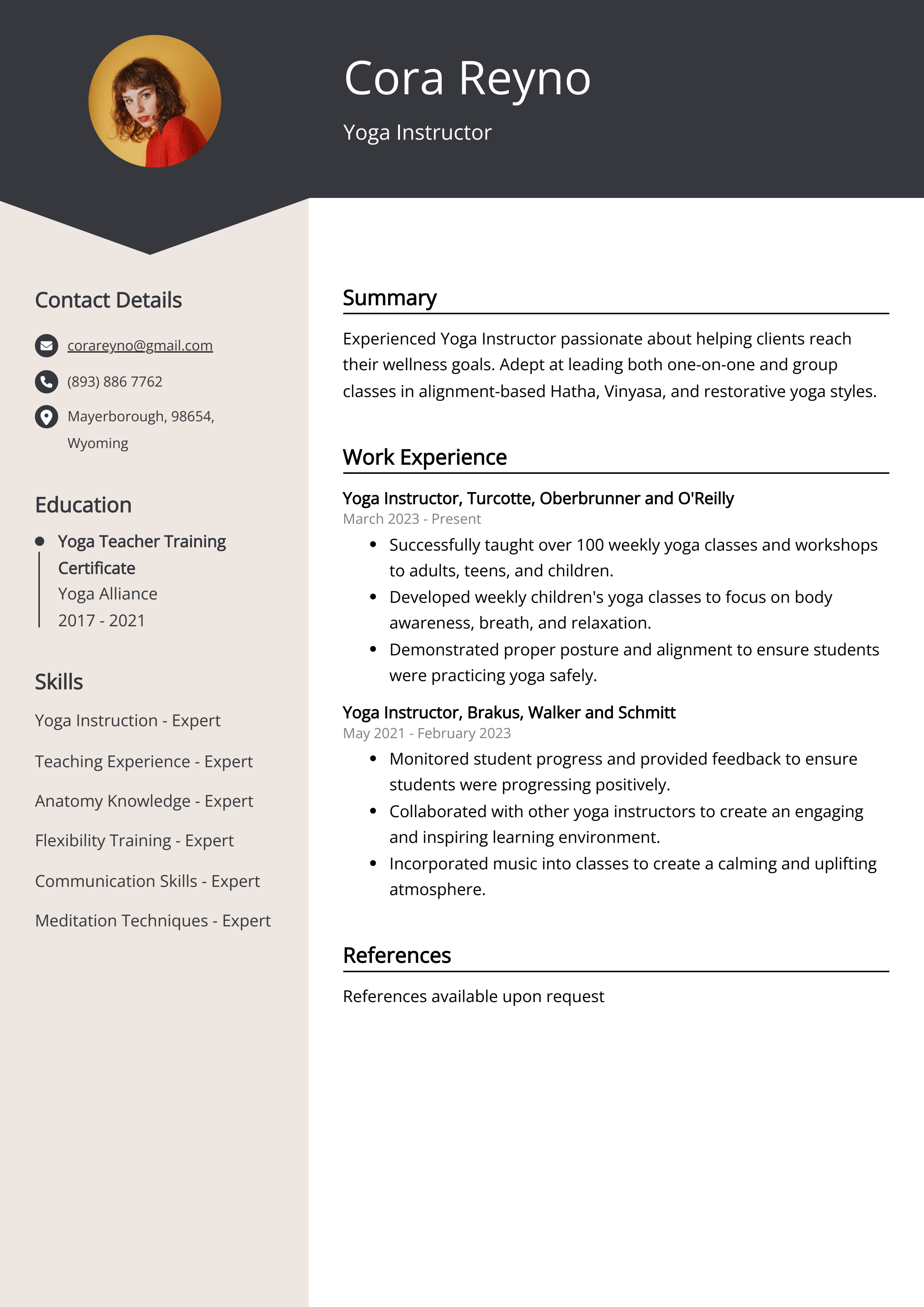
Image Source: resumaker.ai
Building Your Yoga Career From the Ground Up
Starting a career in yoga can feel daunting, especially when you’re just beginning. You might wonder how to showcase your skills and passion when you have limited professional yoga class experience. The good news is that your journey into yoga is rich with teachable moments and transferable abilities. This article will provide actionable yoga resume tips to help you create an impressive entry-level yoga resume that opens doors to opportunities. We’ll cover how to leverage your yoga certification resume, highlight any volunteer yoga experience, and present your yoga teacher training resume effectively.
Deciphering What Employers Look For in New Yoga Instructors
When a studio or wellness center looks to hire an instructor, especially an entry-level one, they aren’t just looking for perfect technical alignment cues. They’re seeking individuals with:
- Passion and Enthusiasm: A genuine love for yoga and teaching is infectious and motivating for students.
- Reliability and Professionalism: Showing up on time, being prepared, and maintaining a positive attitude are crucial.
- Strong Communication Skills: The ability to clearly explain poses, offer modifications, and connect with students verbally and non-verbally.
- A Willingness to Learn: For entry-level roles, a commitment to continuous improvement and professional development is highly valued.
- Safety Consciousness: A solid understanding of basic anatomy and how to guide students safely through poses.
- Student-Centric Approach: Focusing on the needs and experiences of the students in the class.
Crafting Your Yoga Resume: A Step-by-Step Approach
Creating a strong beginner yoga instructor resume involves more than just listing your training. It’s about presenting your skills and experience in a way that demonstrates your potential and suitability for the role.
1. Your Contact Information: Make it Easy to Reach You
This is straightforward but essential. Ensure it’s accurate and professional.
- Full Name: Your legal name.
- Phone Number: A reliable number where you can be reached.
- Email Address: Use a professional-sounding email (e.g., [email protected]).
- Location: City and State are usually sufficient. You don’t need your full address.
- LinkedIn Profile (Optional but Recommended): If you have a professional LinkedIn profile, include the link.
2. The Professional Summary/Objective: Your Elevator Pitch
This is your chance to make a strong first impression. For those with little experience, an objective can be more effective than a summary.
Objective Statement (Focus on your goals and what you offer)
An objective statement is ideal for an entry-level yoga resume. It clearly states your career goals and how you aim to contribute.
- Example Objective: “Enthusiastic and dedicated aspiring yoga instructor with [Your Yoga Certification Name] certification, seeking to bring a calming and supportive yoga experience to students at [Studio Name]. Eager to contribute a passion for mindfulness, breathwork, and safe sequencing to foster a welcoming environment for all levels.”
Professional Summary (If you have some relevant experience, even non-teaching)
If you have any experience that demonstrates leadership, teaching, or working with people, you can lean towards a summary.
- Example Summary: “Passionate and newly certified yoga instructor ([Your Yoga Certification Name]) committed to guiding individuals towards greater physical well-being and mental clarity. Possesses strong communication and interpersonal skills honed through [mention a past role, e.g., customer service], with a deep enthusiasm for creating accessible and inspiring yoga practices. Seeking to apply a foundational understanding of yoga principles and a dedication to student growth in a supportive studio environment.”
3. Education and Certifications: Your Foundation
This section is critical for showcasing your credibility.
-
Yoga Certification: List your primary yoga teacher training. Include the school, the type of certification (e.g., RYT 200, Hatha, Vinyasa), and the completion date.
- Example:
- [Your Yoga Certification Name], [Number] Hours
- [Yoga School Name], [City, State] – [Month, Year]
- Focus: [Mention any specialties, e.g., Vinyasa Flow, Yin Yoga, Trauma-Informed Yoga]
- [Your Yoga Certification Name], [Number] Hours
- Example:
-
Other Relevant Education: Include any degrees, diplomas, or workshops that are relevant to health, wellness, or teaching.
- Example:
- Bachelor of Arts in Psychology
- [University Name], [City, State] – [Year of Graduation]
- CPR/First Aid Certification
- [Issuing Organization] – [Expiry Date]
- Bachelor of Arts in Psychology
- Example:
4. Yoga Class Experience: Showcasing What You’ve Done
Even with limited formal teaching experience, you can still present relevant experience.
-
Volunteer Yoga Experience: This is gold for a beginner yoga instructor resume. Did you teach friends, family, or at a local charity event? Did you assist a more experienced teacher? Detail these.
- Structure:
- Role: e.g., Volunteer Yoga Instructor, Yoga Assistant
- Organization/Setting: e.g., Community Center, Local Charity, Friends & Family Group
- Dates: e.g., Month Year – Month Year
- Key Responsibilities/Accomplishments: Use bullet points and action verbs. Focus on what you did and the impact.
- Example:
- Volunteer Yoga Instructor
- Local Community Shelter, [City, State]
- September 2023 – Present
- Led weekly 60-minute gentle yoga classes for residents, focusing on stress reduction and gentle movement.
- Created a safe and inclusive space, offering modifications for various physical needs.
- Received positive feedback on calming instruction and ability to create a welcoming atmosphere.
- Volunteer Yoga Instructor
- Structure:
-
Workshop or Guest Teaching: If you’ve taught a single workshop or filled in for a teacher, highlight it.
- Example:
- Guest Instructor (1-Hour Workshop: Introduction to Pranayama)
- [Yoga Studio Name], [City, State]
- [Date]
- Designed and delivered a workshop focused on basic breathing techniques to a class of 15 participants.
- Provided clear explanations of diaphragm breathing, Ujjayi breath, and Nadi Shodhana.
- Guest Instructor (1-Hour Workshop: Introduction to Pranayama)
- Example:
-
Assisted Teaching: If you co-taught or assisted another instructor, describe your role.
- Example:
- Yoga Teacher Assistant
- [Yoga Studio Name], [City, State]
- [Month, Year] – [Month, Year]
- Assisted Lead Instructor during Vinyasa Flow classes (averaging 20 students).
- Provided hands-on adjustments (with student consent) and verbal cues for pose alignment.
- Helped set up and tidy the studio space before and after classes.
- Yoga Teacher Assistant
- Example:
5. Other Relevant Experience: Transferable Skills
Think broadly about your past jobs or volunteer roles. What skills did you use that are valuable for a yoga instructor?
- Customer Service: Experience interacting with people, addressing their needs, and providing a positive experience.
- Teaching/Training: Any role where you’ve explained concepts or guided others.
- Healthcare/Wellness: Roles in healthcare, therapy, or fitness.
- Management/Leadership: Demonstrates responsibility and organization.
- Event Planning: Shows organizational skills.
Use bullet points with action verbs to describe your responsibilities and achievements.
- Example:
- Retail Associate
- [Store Name], [City, State]
- [Dates of Employment]
- Provided personalized customer service, actively listening to needs and offering solutions. (Highlights communication and client focus)
- Maintained a clean and organized work environment, ensuring safety and accessibility. (Highlights attention to detail and safety)
- Retail Associate
6. Skills: Highlight Your Abilities
This section can be broken down into hard skills (specific to yoga) and soft skills (interpersonal).
-
Yoga Specific Skills:
- Asana Instruction (mention styles: Vinyasa, Hatha, Yin, Restorative, etc.)
- Pranayama Techniques
- Meditation Guidance
- Anatomy and Physiology Knowledge (as learned in training)
- Pose Modifications & Adjustments
- Sequencing Skills
- Chakra Awareness (if applicable)
- Ayurveda Principles (if applicable)
-
Soft Skills:
- Excellent Communication
- Interpersonal Skills
- Active Listening
- Patience
- Empathy
- Adaptability
- Problem-Solving
- Time Management
- Enthusiasm
- Stress Management
-
Technical Skills:
- Proficiency in Zoom/Online Teaching Platforms (if applicable)
- Basic First Aid/CPR
7. Additional Sections (Optional but can enhance your application)
-
Workshops and Continuing Education: List any additional yoga-related workshops you’ve attended or completed. This shows commitment to building your yoga career.
- Example:
- Workshop: Anatomy for Yoga Teachers – [Instructor/School], [Year]
- Workshop: Trauma-Informed Yoga Principles – [Organization], [Year]
- Example:
-
Personal Practice: Briefly mentioning your personal yoga practice can demonstrate dedication.
- Example: “Dedicated personal practice of [X] years, exploring various styles including [mention styles].”
-
References: You can state “References available upon request” or list them if specifically asked for.
Formatting Your Resume for Impact
Presentation matters. A clean, professional, and easy-to-read format is crucial for any resume, including your yoga teacher training resume.
Resume Layout Essentials
- Font: Use a clean, professional font like Arial, Calibri, Times New Roman, or Georgia. Keep the size between 10-12 points for body text.
- Margins: Maintain standard margins (1 inch) on all sides.
- Consistency: Use consistent formatting for headings, bullet points, and dates throughout the document.
- Length: For entry-level positions, aim for one page. If you have a lot of relevant volunteer or workshop experience, two pages might be acceptable, but one is usually preferred.
- Proofread: Typos and grammatical errors can be detrimental. Proofread multiple times, and ask a friend to review it too.
Key Sections and Their Order
A typical effective order for a beginner yoga instructor resume is:
- Contact Information
- Objective or Professional Summary
- Education and Certifications
- Yoga Class Experience (including Volunteer Experience)
- Other Relevant Experience (Transferable Skills)
- Skills
- Optional Sections (Workshops, Personal Practice)
Using Action Verbs
Start your bullet points with strong action verbs to describe your accomplishments and responsibilities.
Table: Example Action Verbs for a Yoga Resume
| Category | Action Verbs |
|---|---|
| Teaching/Guiding | Instructed, Led, Guided, Demonstrated, Modeled, Facilitated, Taught |
| Communication | Communicated, Explained, Cued, Encouraged, Motivated, Listened, Advised |
| Planning | Designed, Sequenced, Developed, Organized, Planned |
| Support | Assisted, Supported, Modified, Adjusted, Offered, Empowered |
| Personal | Practiced, Studied, Explored, Cultivated, Developed |
Tailoring Your Resume to Each Application
Don’t send the same generic resume to every studio. Take time to customize it for each job description.
- Read the Job Posting Carefully: Identify keywords and specific requirements mentioned by the employer.
- Incorporate Keywords: Weave relevant keywords from the job posting into your resume, especially in your summary/objective and experience sections. If they mention “mindfulness,” “stress reduction,” or a specific style like “Vinyasa,” make sure those terms appear if they align with your experience.
- Highlight Relevant Experience: If a studio emphasizes restorative yoga, make sure your volunteer yoga experience or any training related to restorative practices is prominent.
Presenting Your Resume Online (LinkedIn, Studio Websites)
Many studios will ask for your resume via email or have an online application portal. If you use LinkedIn, ensure your profile mirrors your resume and is up-to-date.
Frequently Asked Questions (FAQ)
Q1: How long should my resume be if I have very little experience?
A1: For an entry-level yoga instructor role, one page is ideal. Focus on quality over quantity, highlighting your most relevant achievements and skills.
Q2: Can I include teaching friends and family on my resume?
A2: Absolutely! Frame it as informal teaching or practice sessions. Describe what you did, such as “Led weekly yoga sessions for friends and family, focusing on basic sequences and mindful breathing,” to demonstrate your initiative and teaching experience.
Q3: What if my yoga certification is recent?
A3: This is perfectly fine for a beginner yoga instructor resume. Clearly state your certification and when you obtained it. Emphasize your enthusiasm, ongoing learning, and any practical experience gained during or immediately after your training.
Q4: Should I mention my personal yoga practice?
A4: Yes, it can be beneficial to briefly mention your personal practice, especially if it demonstrates dedication and a breadth of exposure to different styles. For instance, “Consistent personal yoga practice for 3 years, exploring Hatha and Vinyasa styles.”
Q5: How do I list my yoga teacher training if it’s not a formal RYT certification yet?
A5: List the completed training program, the number of hours, the school name, and the focus. You can say “Completed [Number]-Hour Yoga Teacher Training in [Style]” and mention if you are in the process of registering with Yoga Alliance or another body.
Q6: What if I have no direct teaching experience at all?
A6: Focus on transferable skills from other areas of your life. Highlight any experience where you’ve communicated clearly, led groups, helped others, or demonstrated responsibility. Your objective statement should convey your passion and eagerness to learn and contribute. Your yoga certification resume itself is a significant credential.
Q7: How can I make my entry-level yoga resume stand out?
A7: Tailor your resume to each studio, highlight volunteer work, showcase transferable skills, and use strong action verbs. A well-written objective statement that shows genuine passion for that specific studio can also make a difference.
Conclusion: Your Yoga Resume is Your First Step
Creating a yoga resume with little experience is achievable by focusing on your passion, your training, and your transferable skills. By carefully structuring your information, using action verbs, and tailoring your resume to each opportunity, you can present a compelling case for why you’d be a valuable addition to any yoga community. Remember, your yoga teacher training resume is just the beginning; your enthusiasm and dedication will shine through in your teaching and your interactions. Keep practicing, keep learning, and keep applying those yoga resume tips to build a rewarding building yoga career!