What is the difference between health-related physical fitness and skill-related physical fitness? Health-related physical fitness focuses on physical abilities that contribute to overall health and well-being, such as cardiovascular health and muscle strength. Skill-related physical fitness, on the other hand, involves abilities that help you perform better in sports and other physical activities, like agility and coordination. While both are crucial for a full and active life, they serve distinct purposes and are developed through different types of training. This article will dive deep into the key distinctions between these two vital aspects of physical fitness.
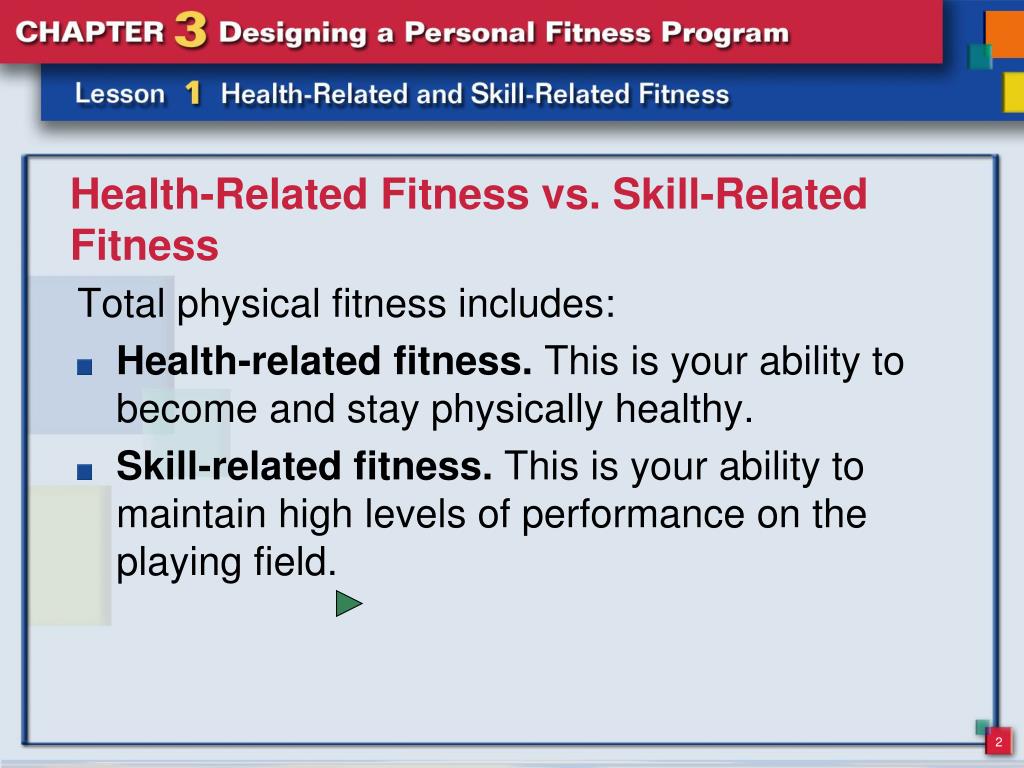
Image Source: image3.slideserve.com
Fathoming Health-Related Physical Fitness
Health-related physical fitness refers to the capacity of an individual to perform daily activities with vigor and alertness, without undue fatigue, and with ample energy to enjoy leisure-time pursuits and meet unforeseen emergencies. It is closely linked to having a healthy body and reduces the risk of chronic diseases like heart disease, diabetes, and obesity. The focus here is on improving and maintaining physical health for longevity and quality of life. It’s about building a resilient body capable of sustained effort and preventing illness.
The Pillars of Health-Related Fitness Components
These components are the building blocks of a healthy body. Working on them helps you live longer and feel better day-to-day. They are essential for everyone, regardless of their athletic aspirations.
-
Cardiorespiratory Endurance: This is the ability of your heart, lungs, and blood vessels to deliver oxygen to your working muscles during sustained physical activity. Think of it as your body’s ability to keep going during activities like running, swimming, or cycling. Good cardiorespiratory endurance means you can perform these activities for longer periods without getting tired. It’s vital for heart health and overall energy levels.
-
Muscular Strength: This refers to the maximum force a muscle or muscle group can exert in a single contraction. Lifting heavy weights or performing a single, powerful movement, like a squat or a bench press, tests muscular strength. It’s important for everyday tasks like carrying groceries or moving furniture, as well as for preventing injuries.
-
Muscular Endurance: This is the ability of a muscle or muscle group to sustain repeated contractions against a resistance for an extended period. Think of doing many repetitions of push-ups or sit-ups. This component is crucial for maintaining posture, performing repetitive tasks, and resisting fatigue over time.
-
Flexibility: This is the range of motion around a joint. It allows your body to move freely and efficiently. Stretching exercises improve flexibility, which can help prevent injuries, reduce muscle soreness, and improve athletic performance. Think about how easily you can touch your toes or reach overhead.
-
Body Composition: This refers to the proportion of fat mass, bone mass, and lean mass (including muscle, water, and organs) in your body. A healthy body composition typically involves a lower percentage of body fat and a higher percentage of lean body mass. This is often measured through methods like body fat percentage analysis. It’s a key indicator of health and a predictor of various diseases.
Delving into Skill-Related Physical Fitness
Skill-related physical fitness, also known as motor fitness, consists of those components of physical fitness that improve skill learning and performance. These abilities are often specific to certain sports or activities and are what allow athletes to excel. While they can contribute to overall health, their primary purpose is performance enhancement. Think about the quick, precise movements of a tennis player or the controlled balance of a gymnast.
The Cornerstones of Skill-Related Fitness Components
These abilities are the secret sauce for performing well in sports and activities requiring precision, speed, and control.
-
Agility: This is the ability to change the body’s position quickly and easily. Think about a basketball player weaving through defenders or a soccer player changing direction to avoid an opponent. Agility requires a combination of speed, balance, and coordination.
-
Balance: This is the ability to maintain the body in a stable position, whether stationary or moving. Static balance is holding still, like standing on one foot. Dynamic balance involves maintaining stability while in motion, such as walking on a narrow beam. Good balance is crucial for many sports and everyday activities, preventing falls.
-
Coordination: This is the ability to use the senses, particularly sight and touch, together with parts of the body, primarily the hands, to produce smooth, accurate movements. Examples include dribbling a basketball, hitting a baseball, or performing a dance routine. It involves the brain and muscles working together seamlessly.
-
Power: This is the ability to exert maximum force in an explosive burst of movement. It’s a combination of strength and speed. Think of a volleyball player spiking a ball, a weightlifter performing a clean and jerk, or a sprinter accelerating off the starting blocks. Power is essential for explosive actions in sports.
-
Reaction Time: This is the amount of time it takes for your body to respond to a stimulus. A quick reaction time is essential in sports where you need to respond to a ball, an opponent, or a starting signal. Think of a swimmer reacting to the starting gun or a goalkeeper reacting to a shot.
Key Distinctions: A Comparative Look
While both types of fitness are important, their goals and how they are achieved differ significantly. Understanding these differences helps tailor your fitness routine to your specific needs and aspirations.
| Feature | Health-Related Physical Fitness | Skill-Related Physical Fitness |
|---|---|---|
| Primary Goal | Improve overall health, well-being, and disease prevention. | Enhance athletic performance and skill acquisition. |
| Focus | Physiological systems (heart, lungs, muscles, metabolism). | Neuromuscular systems and efficient movement patterns. |
| Benefits | Reduced risk of chronic diseases, increased lifespan, better energy. | Improved athletic ability, mastery of specific movements, enhanced reaction. |
| Measurement | Often measured by tests of endurance, strength, flexibility. | Often measured by performance in specific drills or sports. |
| Development | General aerobic exercise, resistance training, stretching. | Specific drills, practice of sports skills, plyometrics. |
| Example Activities | Brisk walking, swimming laps, lifting weights, yoga. | Dribbling a ball, jumping, sprinting, dancing, martial arts. |
The Interplay Between Health and Skill Fitness
It’s important to note that these two domains are not entirely separate. They often influence and enhance each other. For instance, a strong cardiorespiratory system (health-related) will allow an athlete to perform at a higher level for longer (skill-related). Similarly, good coordination and balance (skill-related) can help prevent injuries during strength training (health-related), allowing for consistent progress.
A cyclist with excellent cardiorespiratory endurance can sustain power output for longer during a race. A dancer with superior balance and coordination can execute complex choreography with grace and precision, which also requires good muscular endurance to hold poses.
Developing Your Fitness Profile
To achieve optimal physical well-being and performance, a balanced approach incorporating both health-related and skill-related fitness is recommended.
Strategies for Enhancing Health-Related Fitness:
- Cardiorespiratory Endurance: Aim for at least 150 minutes of moderate-intensity aerobic activity or 75 minutes of vigorous-intensity aerobic activity per week. Examples include jogging, cycling, swimming, or dancing.
- Muscular Strength and Endurance: Engage in muscle-strengthening activities that work all major muscle groups at least two days a week. This can involve lifting weights, using resistance bands, or performing bodyweight exercises like push-ups and squats.
- Flexibility: Incorporate stretching exercises into your routine most days of the week. Hold stretches for 15-30 seconds, focusing on major muscle groups.
- Body Composition: A combination of regular physical activity and a balanced, healthy diet is key to achieving a healthy body composition.
Strategies for Enhancing Skill-Related Fitness:
- Agility: Practice drills that involve quick changes in direction, such as shuttle runs, cone drills, or ladder drills.
- Balance: Work on exercises like single-leg stands, walking heel-to-toe, or yoga poses.
- Coordination: Engage in activities that require hand-eye or foot-eye coordination, such as playing catch, juggling, or sports like tennis or basketball.
- Power: Incorporate explosive exercises like jump squats, plyometric push-ups, or medicine ball throws into your training.
- Reaction Time: Practice reaction drills, such as reacting to visual or auditory cues, or playing video games that require quick reflexes.
Why Both Matter: A Holistic Perspective
Prioritizing only one type of fitness can lead to an imbalanced physical capacity. For example, someone who focuses solely on building massive muscular strength might neglect their cardiorespiratory endurance, impacting their overall health and ability to sustain effort. Conversely, an athlete who is incredibly agile but has weak muscles might be more prone to injuries.
A well-rounded fitness program aims to improve all aspects of physical fitness, leading to a more robust, capable, and healthier individual. This holistic approach ensures you are not only strong and can perform complex movements but also have the internal physiological health to support these activities and live a long, vibrant life.
Think about daily life. Being able to carry your groceries home without getting winded is health-related fitness (cardiorespiratory endurance and muscular strength). Being able to quickly sidestep an obstacle while walking down the street is skill-related fitness (agility and reaction time). Both contribute to your ability to navigate the world safely and comfortably.
Common Misconceptions
It is a common mistake to think that being good at sports automatically means you have excellent health. While athletic prowess often involves good skill-related fitness, it doesn’t always translate to superior health-related fitness. An athlete might have amazing agility but poor body composition or insufficient cardiorespiratory endurance if their training is not well-rounded. Similarly, someone who exercises primarily for health might have good cardiorespiratory endurance but lack the specific skills for a particular sport.
Another misconception is that one type of fitness is inherently “better” than the other. The truth is, their importance is relative to an individual’s goals. For a professional athlete, skill-related fitness might take precedence, while for someone focused on longevity and disease prevention, health-related fitness will be paramount. However, for overall well-being, integrating both is the optimal strategy.
Frequently Asked Questions (FAQ)
Q1: Can I improve both health-related and skill-related fitness at the same time?
Yes, absolutely! Many exercises and activities contribute to both. For instance, playing soccer improves cardiorespiratory endurance (health-related) and agility, coordination, and reaction time (skill-related). A well-designed workout program can effectively target both domains.
Q2: What is the most important component of fitness?
The most important component depends on your personal goals. For general health and longevity, cardiorespiratory endurance and maintaining a healthy body composition are often considered foundational. For athletic performance, components like power and agility might be prioritized. However, a balanced approach is always beneficial for overall well-being.
Q3: How often should I train for health-related fitness?
The general recommendation for health-related fitness is to engage in at least 150 minutes of moderate-intensity aerobic activity or 75 minutes of vigorous-intensity aerobic activity per week, along with muscle-strengthening activities at least two days per week.
Q4: How do I know if I need to focus more on health-related or skill-related fitness?
Consider your lifestyle and goals. If your primary aim is to improve your overall health, reduce your risk of chronic diseases, and have more energy for daily tasks, focus on health-related components. If you are an athlete aiming to improve your performance in a specific sport or activity, prioritize skill-related components alongside a solid foundation of health-related fitness.
Q5: Are there any tests to measure these components?
Yes, there are various fitness tests. For health-related fitness, examples include the 1-mile walk test for cardiorespiratory endurance, push-up tests for muscular endurance, and sit-and-reach tests for flexibility. For skill-related fitness, tests might include agility drills like the T-test, balance tests like the stork stand, and reaction time tests using specialized equipment.
By diligently working on both health-related and skill-related physical fitness, you can build a body that is not only resilient and disease-free but also capable of performing with precision, speed, and control. This dual focus leads to a more fulfilling and active life.