
So, how much do yoga teachers make per class? The typical pay for a yoga teacher per class can range anywhere from $15 to $75, but this is a broad estimate. Many factors influence this, including experience, location, type of venue, and whether the class is part of a larger compensation package or a standalone offering. This blog post will dive deep into the various aspects that shape a yoga teacher’s income and earning potential.
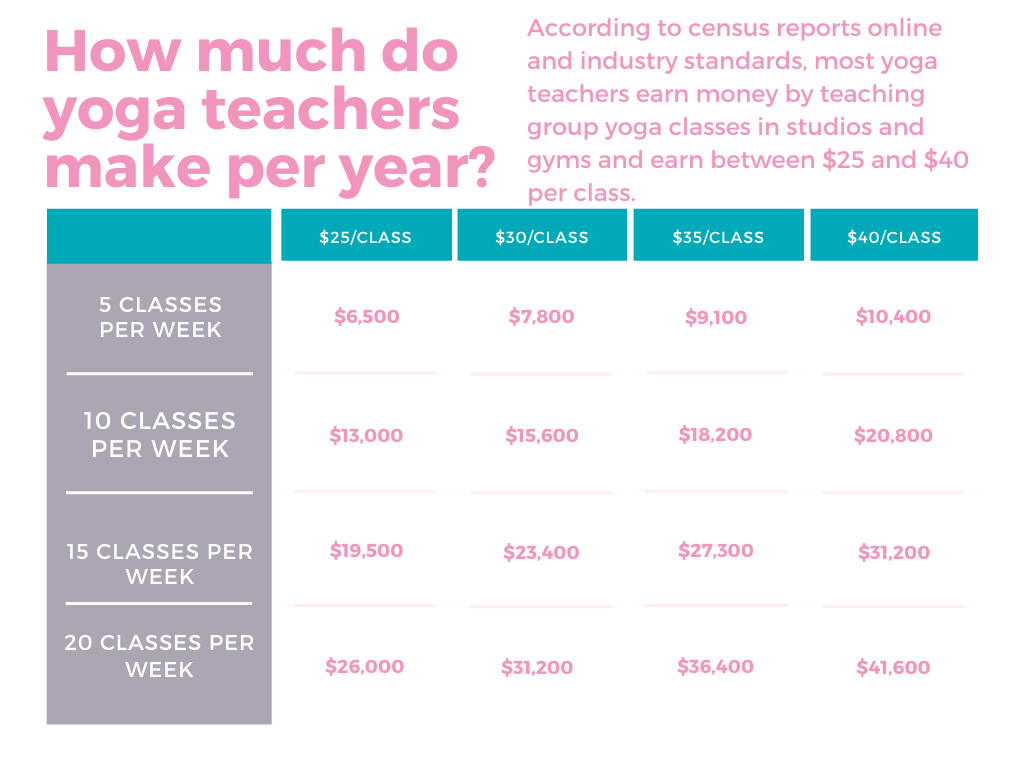
Image Source: www.brettlarkin.com
The Varied Landscape of Yoga Teacher Income
The life of a yoga teacher can be wonderfully rewarding, offering the chance to share a passion for wellness and mindfulness with others. However, translating that passion into a stable income can sometimes feel like a complex yogic pose in itself. The truth is, there isn’t a single, universal answer to “how much do yoga teachers make per class?” Instead, it’s a mosaic of different income streams, each with its own unique pay structure and earning potential.
Deciphering Yoga Studio Compensation
For many yoga teachers, their primary income source comes from teaching at established yoga studios. The yoga studio compensation structure can vary significantly. Some studios offer a flat rate per class, while others operate on a commission or revenue-sharing model.
-
Flat Rate Per Class: This is a straightforward approach. A studio agrees to pay the instructor a fixed amount for each class taught, regardless of attendance. Rates can range from $20 to $50 or more per class, depending on the studio’s pricing, the teacher’s experience, and the demand for their particular style of yoga. A brand-new teacher might start at the lower end, while a highly sought-after instructor with years of experience could command a higher flat fee.
-
Revenue Sharing/Commission: In this model, the teacher receives a percentage of the revenue generated by their class. This might be a direct percentage of the student drop-in fees for that specific class. For example, if a studio charges $20 per drop-in and 10 students attend a teacher’s class, and the teacher receives 50% of the revenue, they would earn $100 for that class. This can be attractive as it directly links income to student participation, but it also means income can fluctuate more.
-
Hybrid Models: Some studios might combine these. A teacher might receive a lower base rate per class, plus a bonus or a smaller percentage of revenue if a certain attendance threshold is met.
Factors Affecting Yoga Studio Pay:
- Location: Major cities with a high cost of living and a strong yoga culture tend to have higher yoga class rates for instructors. A class in New York City might pay more than an identical class in a smaller town.
- Studio’s Pricing Structure: A studio that charges premium prices for classes can typically afford to pay its instructors more.
- Teacher’s Experience and Specialization: Experienced teachers, those with specialized certifications (e.g., prenatal, restorative, advanced anatomy), or those who teach popular or niche styles often command higher rates.
- Class Type and Length: Longer classes or specialized workshops often have higher pay rates than standard 60-minute classes.
- Teacher’s Contribution Beyond Teaching: Some studios may offer additional compensation for teachers who also handle administrative tasks, marketing, or community engagement.
The World of Freelance Yoga Teacher Earnings
Many yoga teachers choose the path of a freelance yoga teacher earnings. This offers greater autonomy and the ability to build a diverse client base. Freelance work can include teaching at various studios, gyms, community centers, and offering private sessions.
Private Yoga Session Fees
Private yoga session fees are often a significant component of a freelance yoga teacher’s income. This is where instructors can often earn the most per hour. Rates for private sessions are highly variable and depend on:
- Teacher’s Expertise: A highly qualified or specialized teacher can charge more.
- Location: As with studio classes, prices are generally higher in metropolitan areas.
- Client’s Needs: If a client requires specialized therapeutic yoga or a highly customized program, the fees will reflect that.
- Session Length and Frequency: Longer or more frequent sessions might come with a slight discount per session, or a package deal.
Typical Private Session Rates:
| Session Type | Typical Rate Range (per 60-90 min session) |
|---|---|
| Beginner/General | $50 – $100 |
| Experienced/Specialized | $75 – $150+ |
| Semi-Private (2-3 people) | $80 – $180+ |
It’s important for freelance teachers to factor in the cost of travel, marketing, insurance, and self-employment taxes when setting their private session fees.
Corporate Yoga Rates
Corporate yoga rates are another lucrative avenue for yoga teachers. Businesses increasingly recognize the benefits of yoga and mindfulness for employee well-being, stress reduction, and productivity.
- On-site Classes: Companies may hire yoga teachers to come to their office to lead classes. Rates can be per class or a contracted hourly rate.
- Virtual Classes: With the rise of remote work, many companies opt for virtual yoga sessions.
Corporate Yoga Pricing:
Corporate rates are typically higher than standard studio rates due to the professional environment and the value proposition for the business.
- Per Class: Expect to charge between $75 and $200+ per class for corporate clients.
- Hourly: A broader hourly rate for corporate services might range from $75 to $250 or more, depending on the scope of the engagement.
Factors influencing corporate rates include the duration of the session, the number of employees participating, and the specific needs of the company (e.g., stress management, posture improvement).
The Yoga Teacher Hourly Wage: A Deeper Look
While many yoga teachers are paid per class, it’s sometimes helpful to think in terms of a yoga teacher hourly wage to compare different opportunities. If a standard 60-minute class pays $30, and the teacher spends an hour traveling, setting up, teaching, and packing up, their effective hourly wage for that specific class might be closer to $30. However, this doesn’t account for the time spent on class planning, marketing, administrative tasks, or professional development, which are all crucial parts of being a yoga teacher.
The average yoga teacher pay is often masked by these varying structures. A teacher who teaches five classes a week at $40 per class, and also leads two private sessions a week at $80 each, will have a different income than a teacher who has one full-time position at a studio with a base salary plus class bonuses.
Earning Potential for Yoga Instructors: Beyond the Mat
The earning potential for yoga instructors extends beyond simply leading group classes. To build a more substantial income, many teachers diversify their offerings:
- Workshops and Special Events: These are typically longer, more in-depth sessions focusing on specific themes, poses, or yoga styles. They can command higher fees, often charged per person, with rates for a 2-3 hour workshop ranging from $40 to $75+.
- Retreats: Organizing or co-leading yoga retreats can be a significant income generator, though they require substantial planning and investment.
- Teacher Training: Experienced teachers can become lead trainers or guest lecturers in yoga teacher training programs, which pay considerably well.
- Online Content: Creating and selling online yoga classes, courses, or membership programs can provide passive income and reach a global audience.
- Product Sales: Some teachers sell branded merchandise, yoga props, or their own developed wellness products.
- Writing and Blogging: Sharing yoga knowledge through articles, books, or a personal blog can lead to opportunities for paid writing and advertising revenue.
- Therapeutic Yoga/Specialized Coaching: Focusing on yoga for specific conditions (e.g., back pain, anxiety) or client types (e.g., athletes, seniors) can allow for higher fees due to specialized expertise.
Factors Influencing Overall Yoga Teacher Income
Beyond the per-class rate, several factors contribute to a yoga teacher’s overall yoga teacher income:
- Number of Classes Taught: The more classes a teacher consistently teaches, the higher their gross income will be.
- Consistency of Work: Securing regular teaching slots at multiple studios or with private clients provides a more stable income stream.
- Brand Building and Marketing: A strong personal brand and effective marketing can attract more students and higher-paying opportunities.
- Professional Development: Continuously learning and acquiring new certifications or skills can open doors to more advanced and better-paying teaching roles.
- Geographic Location: As mentioned, the cost of living and the demand for yoga services in a particular area play a huge role.
- Economic Conditions: During economic downturns, discretionary spending on activities like yoga classes can decrease, impacting teacher earnings.
Tables Illustrating Income Scenarios
Let’s look at a couple of hypothetical scenarios to illustrate the potential income variations for yoga teachers.
Scenario 1: Entry-Level Yoga Teacher (Part-Time)
- Experience: 1-2 years
- Classes per week: 4 (studio classes)
- Average pay per studio class: $30
- Private sessions per week: 1 (60-minute session)
- Average private session fee: $60
Weekly Income Calculation:
* Studio classes: 4 classes * $30/class = $120
* Private sessions: 1 session * $60/session = $60
* Total Weekly Gross Income: $180
Annual Gross Income (assuming 48 working weeks): $180/week * 48 weeks = $8,640
Scenario 2: Experienced Yoga Teacher (Full-Time Equivalent)
- Experience: 5+ years, specialized certifications
- Classes per week: 8 (studio classes)
- Average pay per studio class: $50
- Private sessions per week: 3 (average 75-minute session)
- Average private session fee: $100
- Monthly Workshop: 1 workshop (20 participants at $50 each)
Weekly Income Calculation:
* Studio classes: 8 classes * $50/class = $400
* Private sessions: 3 sessions * $100/session = $300
* Total Weekly Gross Income (from classes/sessions): $700
Monthly Workshop Income: 20 participants * $50/participant = $1,000
Annual Income Calculation (assuming 48 working weeks and 12 workshops):
* Weekly income from classes/sessions: $700/week * 48 weeks = $33,600
* Workshop income: $1,000/month * 12 months = $12,000
* Total Annual Gross Income: $33,600 + $12,000 = $45,600
Important Considerations for All Teachers:
- Self-Employment Taxes: Freelance yoga teachers are responsible for paying their own self-employment taxes (Social Security and Medicare), which is typically around 15.3% of their net earnings.
- Business Expenses: Deductible expenses can include:
- Yoga certifications and continuing education
- Yoga props and equipment
- Insurance (liability insurance is crucial)
- Marketing and website costs
- Travel expenses
- Home office expenses (if applicable)
- Paid Time Off/Sick Leave: Unlike salaried employees, yoga teachers don’t typically get paid for days they don’t work due to illness or vacation.
- Benefits: Studio employment might offer some benefits like free classes or discounts, but comprehensive benefits like health insurance are rare unless working for a larger fitness chain.
Fathoming the Future: Building a Sustainable Yoga Career
For aspiring and practicing yoga teachers, building a sustainable career often involves a strategic approach to diversifying income streams. Relying solely on studio classes might not provide the financial security many seek. Actively pursuing private clients, corporate partnerships, and developing additional offerings like workshops or online content can significantly boost yoga teacher income.
Tips for Increasing Your Earning Potential:
- Specialize: Become an expert in a specific area of yoga (e.g., yoga for athletes, trauma-informed yoga, prenatal yoga). Specialists can often charge higher rates.
- Get Certified: Higher levels of certification and specialized training can command better pay.
- Build Your Brand: Develop a professional website, engage on social media, and gather testimonials.
- Network: Connect with other teachers, studio owners, and potential clients.
- Offer Packages: Create attractive packages for private clients (e.g., a series of 5 sessions at a discounted rate) to encourage commitment.
- Teach at Multiple Venues: Don’t limit yourself to one studio. Explore gyms, community centers, schools, and corporate offices.
- Develop Online Offerings: Create an online presence with recorded classes, live streams, or membership platforms.
- Seek Out Corporate Gigs: Proactively reach out to local businesses about offering yoga and mindfulness programs.
- Host Workshops and Retreats: These can be significant income boosters and excellent for client retention.
- Manage Your Finances Wisely: Track expenses, set aside money for taxes, and create a budget.
Frequently Asked Questions (FAQ)
Q1: What is the average hourly wage for a yoga teacher?
A: While yoga teachers are often paid per class, if we consider the time spent teaching a 60-minute class, the effective hourly wage can range from $25 to $75. However, this doesn’t account for unpaid time spent on preparation, travel, or marketing.
Q2: Can I make a full-time living as a yoga teacher?
A: Yes, it is possible to make a full-time living as a yoga teacher, but it typically requires teaching a significant number of classes, offering private sessions, and diversifying income through workshops, retreats, or online content. It often involves entrepreneurial skills and a proactive approach to business development.
Q3: Who sets the yoga class rates?
A: Yoga class rates are typically set by the yoga studio or the business hiring the teacher. For private sessions or freelance corporate work, the yoga teacher sets their own rates, though they are influenced by market demand and their own perceived value.
Q4: How much do beginners make per yoga class?
A: Beginner yoga teachers might earn between $15 and $30 per class at a studio. Private sessions for beginners might start around $50.
Q5: Is yoga teaching a well-paying profession?
A: While some highly experienced and entrepreneurial yoga teachers can earn a very good income, for many, it’s a passion-driven career that can supplement other income streams or provide a moderate living. The earning potential for yoga instructors is highly variable and depends on many factors.
In conclusion, the question of “how much do yoga teachers make per class” is multifaceted. It’s a profession where dedication, skill, business acumen, and a little bit of entrepreneurial spirit can lead to a fulfilling and financially rewarding career. By understanding the various compensation models, diversifying offerings, and continuously developing their practice and business, yoga teachers can indeed craft a sustainable and prosperous livelihood on and off the mat.