
How long to hold asanas? Typically, holding yoga poses for anywhere from 5 to 10 breaths is a good starting point. However, the ideal yoga pose duration can vary significantly based on your goals, the specific pose, and your experience level. This guide will explore the nuances of holding postures in yoga and how to optimize your yoga pose retention for maximum benefits.
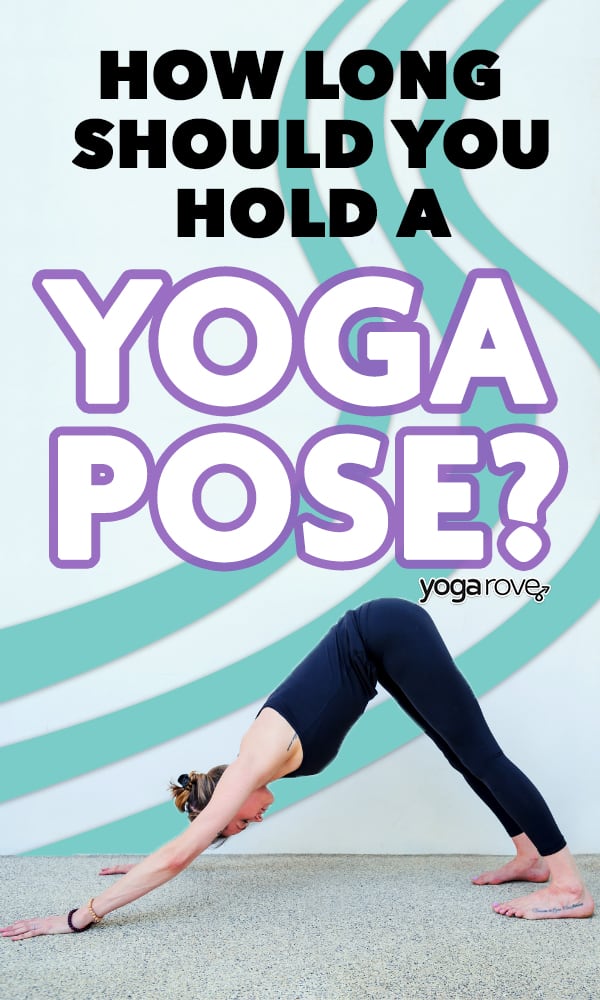
Image Source: yogarove.com
The Science of Holding Static Yoga Poses
Static yoga poses, those held without significant movement, are fundamental to many yoga practices. They build strength, improve flexibility, and cultivate mental focus. But how long should you stay in each one? It’s not a one-size-fits-all answer.
Building Strength and Endurance
When you hold a pose, your muscles are engaged in isometric contraction. This means the muscle is activated, but its length doesn’t change. This type of contraction is excellent for building muscular strength and endurance.
- Muscle Fiber Recruitment: Longer holds encourage the recruitment of more muscle fibers, including slow-twitch fibers, which are crucial for sustained effort.
- Connective Tissue Adaptation: Holding poses for extended periods can also encourage adaptation in connective tissues like ligaments and tendons, making them stronger and more resilient.
Enhancing Flexibility and Range of Motion
Flexibility gains often come from allowing the body to relax into a stretch over time.
- Tissue Lengthening: Muscles and fascia (connective tissue) that are tight can gradually release when held in a stretched position, leading to increased range of motion.
- Proprioception: Longer holds can improve your proprioception – your body’s awareness of its position in space. This allows you to safely deepen into stretches.
Cultivating Mindfulness and Breath Awareness
The stillness required for holding poses is a powerful tool for cultivating mindfulness.
- Breath Synchronization: Synchronizing your breath with the hold deepens your connection to your body and your breath. This can reduce stress and promote a sense of calm.
- Observing Sensations: Holding a pose allows you to observe the subtle sensations in your body without judgment, fostering a deeper mind-body connection.
Decoding Yoga Pose Duration: Breath Counts as a Guide
While time on the clock is one measure, in yoga, yoga pose duration is often guided by breath. The breath is a natural rhythm that can help you gauge your engagement and comfort in a pose.
The Breath as an Internal Clock
- 5 Breaths: A good starting point for many poses, especially if you are new to a particular posture or are building foundational strength. This allows for adequate muscle engagement without excessive fatigue.
- 8-10 Breaths: For poses where you are aiming for deeper stretches or more sustained muscular effort, this duration can be very effective. It allows the body to settle into the pose more fully.
- 10+ Breaths: Often reserved for more advanced practitioners, restorative poses, or specific therapeutic applications where deep relaxation and tissue lengthening are the primary goals.
Factors Influencing Your Hold Time
Several factors can influence how long you should hold a pose:
- Your Experience Level: Beginners might start with shorter holds (3-5 breaths), while experienced practitioners may hold poses for 10-15 breaths or more.
- The Specific Pose: Some poses are naturally held longer than others. For example, balancing poses might be held for fewer breaths to maintain stability, while seated forward folds might be held for longer to encourage release.
- Your Physical Condition: Listen to your body. If you feel excessive strain, trembling, or pain, reduce your hold time.
- Your Intention for the Practice: Are you focusing on strength, flexibility, relaxation, or a combination? Your intention will guide your duration.
Strategic Holding Times for Common Poses
Let’s look at some popular poses and discuss appropriate yoga pose retention strategies.
How Long to Hold Downward Dog (Adho Mukha Svanasana)?
How long to hold Downward Dog? For most practitioners, holding Downward Dog for 5-10 breaths is beneficial.
- Beginners: Start with 5 breaths. Focus on proper alignment: pressing firmly through your hands, lengthening your spine, and allowing your heels to soften towards the mat.
- Intermediate/Advanced: Holding for 8-10 breaths can deepen the stretch in the hamstrings and calves and build strength in the shoulders and arms. You can even hold it for longer in certain sequences, using it as a resting pose between more challenging postures.
How Long to Hold Warrior 2 (Virabhadrasana II)?
How long to hold Warrior 2? A common duration for Warrior 2 is 5-8 breaths per side.
- Strength Focus: Holding for 5-8 breaths encourages sustained engagement of the quadriceps, glutes, and core. This builds isometric strength.
- Flexibility Focus: In poses like Warrior 2, a longer hold (up to 10 breaths) can help open the hips and chest more deeply, provided your legs remain strong and stable.
- Alignment Check: Use your breath to check in with your alignment. Are your knees stacked over your ankles? Is your torso stacked over your hips?
How Long to Hold Plank (Phalakasana)?
How long to hold Plank? The duration for Plank can vary from 30 seconds to a minute for most practitioners.
- Strength Building: Plank is a potent core-strengthening pose. Holding it for 30-60 seconds, with good form, is excellent for building core endurance.
- Breath Pace: Focus on maintaining a steady breath throughout the hold. If your breath becomes ragged or you sag in your hips, it’s time to come down.
- Progression: Start with shorter holds and gradually increase the duration as your strength improves. You can also practice variations like side plank to engage different core muscles.
Exploring Vinyasa Hold Times
Vinyasa hold times are intrinsically linked to the flow of the practice. In a vinyasa sequence, poses are often held for a shorter duration to facilitate movement and breath.
The Flowing Nature of Vinyasa
- Transition Focus: Vinyasa is about moving from one pose to the next with the breath. This means poses are typically held for only 3-5 breaths, sometimes even less.
- Building Heat: The rapid transitions and shorter holds in vinyasa build internal heat, which can aid in detoxification and flexibility.
- Dynamic Strength: While not focusing on isometric holds, vinyasa builds dynamic strength as you move through the poses.
Finding Balance in Vinyasa
Even in a flowing practice, mindful holding postures in a vinyasa sequence is important.
- Momentum vs. Control: The goal is to move with control, not just momentum. Take those 3-5 breaths to truly feel the pose and prepare for the transition.
- Peak Poses: In some vinyasa classes, you might hold a “peak pose” for longer, perhaps 8-10 breaths, to really work into it before moving on.
The Benefits of Holding Yoga Poses: A Deeper Dive
The benefits of holding yoga poses extend beyond physical strength and flexibility.
Physiological Gains
- Increased Muscle Hypertrophy: Consistent, challenging holds can lead to muscle growth.
- Improved Bone Density: Weight-bearing poses, held for sufficient durations, can contribute to stronger bones.
- Enhanced Cardiovascular Health: Holding poses, especially in sequences that challenge your stamina, can benefit your heart health.
- Nervous System Regulation: The stillness and focus required can calm the sympathetic nervous system and activate the parasympathetic nervous system, promoting relaxation.
Mental and Emotional Rewards
- Increased Focus and Concentration: Holding a pose requires mental discipline, improving your ability to concentrate.
- Stress Reduction: The combination of breath awareness and physical exertion can be a powerful stress reliever.
- Resilience and Patience: Learning to stay with challenging sensations in a pose cultivates resilience and patience, qualities that can be applied to life off the mat.
- Self-Awareness: Longer holds offer more opportunities to observe your thoughts, emotions, and physical sensations, fostering deeper self-awareness.
When to Hold Longer, When to Move On
Deciding how long to hold yoga poses involves a dialogue with your body and your practice.
Listening to Your Body
- No Pain, Only Sensation: It’s crucial to distinguish between discomfort from a stretch and actual pain. Pain is a signal to back off.
- Fatigue vs. Stability: While some fatigue is expected in longer holds, significant trembling or loss of form indicates you’ve held the pose for too long for your current capacity.
- Breath Quality: If your breath becomes strained or shallow, shorten your hold.
Tailoring Holds to Your Goals
- For Strength: Focus on holds where you feel a consistent, strong engagement in the target muscles, typically 5-10 breaths.
- For Flexibility: Allow yourself to relax into the stretch for longer durations, focusing on breath to ease tension, perhaps 8-12 breaths or more.
- For Balance: Shorter, more controlled holds (3-5 breaths) are often best to maintain stability.
- For Restorative: In restorative yoga, poses can be held for several minutes, using props to support the body and allow for deep relaxation.
Common Pitfalls in Yoga Pose Retention
Even with the best intentions, some common mistakes can hinder progress when it comes to yoga pose duration.
Holding Too Long
- Loss of Form: Holding a pose beyond your capacity can lead to compromised alignment, increasing the risk of injury.
- Excessive Strain: Pushing too hard for too long can cause muscle fatigue and strain, counteracting the benefits.
- Mental Frustration: Holding a pose that feels overwhelming can lead to frustration rather than mindful engagement.
Holding Too Short
- Missed Opportunities: Not holding poses long enough means you might miss out on the deeper physiological and mental benefits.
- Lack of Adaptation: Muscles and connective tissues need time to adapt to stimuli. Insufficient hold times may not provide enough challenge for adaptation.
- Surface-Level Practice: Short holds can keep the practice on a more superficial level, missing the opportunity for deeper release and strengthening.
Tables for Quick Reference
Here’s a quick guide to typical hold times for various types of poses. Remember, these are guidelines, and your own experience will dictate the best duration for you.
Table 1: General Yoga Pose Hold Times (Breath Counts)
| Pose Type | Beginner Range | Intermediate Range | Advanced Range | Focus |
|---|---|---|---|---|
| Standing Poses | 3-5 | 5-8 | 8-10+ | Strength, Stability, Endurance |
| Seated Poses | 5-8 | 8-10 | 10-15+ | Flexibility, Deep Stretch, Relaxation |
| Inversions | 3-5 | 5-8 | 8-10+ | Strength, Balance, Circulation |
| Backbends | 3-5 | 5-8 | 8-10+ | Opening, Strength, Mobility |
| Twists | 3-5 | 5-8 | 8-10+ | Spinal Mobility, Detoxification |
| Restorative Poses | 1-3 minutes | 3-5 minutes | 5-10 minutes | Deep Relaxation, Healing, Stress Relief |
Table 2: Specific Pose Hold Times
| Pose Name | Typical Hold (Breaths) | Primary Benefits Targeted | Notes |
|---|---|---|---|
| Downward-Facing Dog | 5-10 | Hamstring & Calf Lengthening, Shoulder & Arm Strength | Can be used as a resting pose; focus on spinal length. |
| Warrior II | 5-8 per side | Leg Strength, Hip Opening, Chest & Shoulder Opening | Maintain strong foundation; feel the grounding. |
| Plank | 30-60 seconds | Core Strength, Shoulder & Arm Endurance | Keep hips level; breathe steadily. |
| Triangle Pose | 5-8 per side | Hamstring & Side Body Lengthening, Hip Opening | Lengthen through the crown of the head; keep core engaged. |
| Child’s Pose | 1-5 minutes | Relaxation, Spinal Release, Stress Reduction | Use as a resting pose whenever needed. |
| Cobra Pose | 3-5 | Spinal Strengthening, Chest Opening | Engage glutes to protect lower back; lift with the back muscles. |
| Pigeon Pose | 8-10 per side | Deep Hip Flexor & Glute Stretch | Listen to your knees; use props for support if needed. |
| Mountain Pose | 5-8 | Grounding, Posture, Body Awareness | Stand tall, feel the earth beneath your feet. |
| Tree Pose | 3-5 per side | Balance, Ankle Strength, Focus | Engage your core to find stability; find a drishti (focal point). |
| Bridge Pose | 5-8 | Glute & Hamstring Strengthening, Chest Opening | Keep knees parallel; avoid over-arching the back. |
| Seated Forward Fold | 8-15 | Hamstring & Spinal Lengthening, Calming the Nervous System | Focus on the breath to release into the stretch; avoid rounding the back. |
Frequently Asked Questions
Q: Is there a “correct” number of breaths to hold a pose?
A: No, there isn’t a single “correct” number. It depends on your body, the pose, your experience, and your intentions. Breath counts are guides, not rigid rules.
Q: What happens if I hold a pose for too long?
A: Holding a pose for too long can lead to muscle strain, fatigue, loss of proper alignment, and potential injury. It can also create mental frustration.
Q: What happens if I don’t hold poses long enough?
A: Not holding poses long enough might mean you miss out on the full benefits, such as deeper stretches, strength gains, and mental focus development. Your body may not have enough time to adapt to the pose.
Q: How should I breathe when holding yoga poses?
A: Aim for slow, deep, and steady breaths, typically through the nose. Your breath should remain smooth and rhythmic throughout the hold.
Q: When should I use shorter holds versus longer holds?
A: Shorter holds (3-5 breaths) are good for dynamic flows (vinyasa), building heat, and when you need to maintain significant stability or strength. Longer holds (8-15+ breaths) are beneficial for deeper stretching, building endurance, and cultivating stillness and mindfulness.
Q: Can I hold poses longer in a restorative yoga class?
A: Yes, absolutely. Restorative yoga is designed for long holds, often using props to support the body. These holds can last from several minutes to much longer, allowing for deep relaxation and healing.
Q: How do I know if I’m holding a pose correctly and for the right amount of time?
A: Pay close attention to your body’s signals. Are you able to maintain good alignment? Is your breath steady? Are you feeling a beneficial stretch or engagement without pain? If the answer to any of these is no, it might be time to adjust your hold time or your alignment.
By carefully considering how long to hold yoga poses and listening to your body, you can transform your practice, maximizing gains in strength, flexibility, and mindfulness. Embrace the journey of discovery on your mat, and let your breath be your guide.