
How long should you hold yoga poses? Generally, for beginners, holding poses for 3-5 breaths is a good starting point. For more experienced practitioners, holding poses for 5-10 breaths or even longer is common, depending on the style of yoga and the specific pose.
The duration you hold a yoga pose, often referred to as yoga pose duration, is a crucial element in reaping the full benefits of your practice. It’s not just about getting into the shape; it’s about what happens during the time you inhabit it. This guide will delve into the nuances of holding yoga poses across various styles, helping you tailor your practice for optimal results.
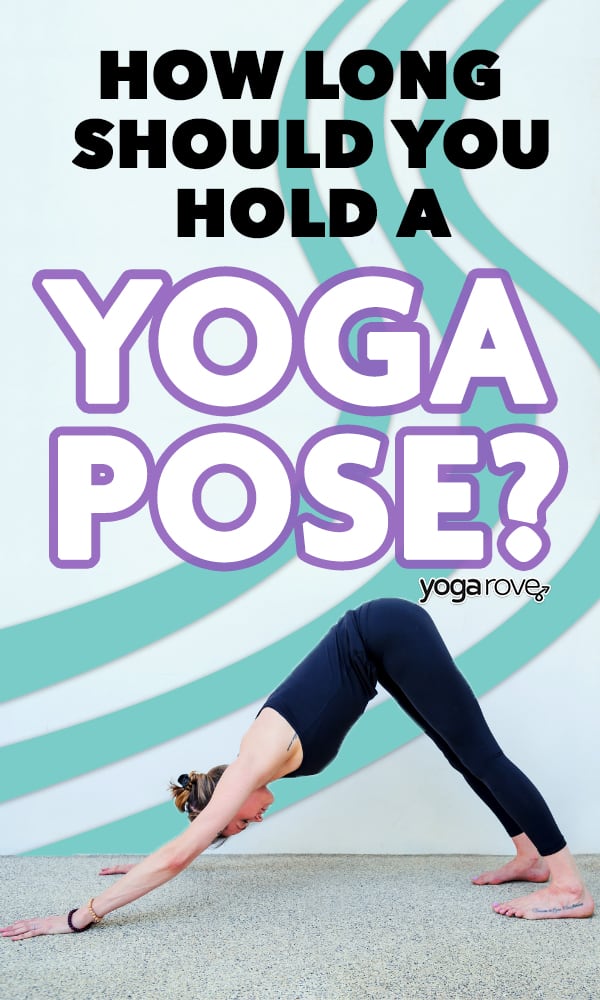
Image Source: yogarove.com
The Purpose Behind the Hold
Why is yoga pose duration so important? Holding a pose allows your body to experience its effects fully. It’s during these sustained moments that:
- Muscles are strengthened and stretched: Holding builds isometric strength and allows connective tissues to lengthen.
- Breath awareness deepens: A consistent breath can anchor you in the pose and enhance its meditative qualities.
- Focus and mental fortitude are cultivated: Staying in a challenging pose requires concentration and resilience.
- Energy meridians (nadis) are activated: According to yogic philosophy, sustained poses help to move and balance vital life force energy.
The ideal yoga pose duration is not a one-size-fits-all answer. It depends on your goals, your physical condition, and the style of yoga you are practicing.
Decoding Yoga Styles and Their Timing
Different yoga traditions have different approaches to holding yoga poses. Understanding these distinctions is key to finding the right yoga sequence timing for your needs.
Hatha Yoga: The Foundation of Stillness
Hatha yoga hold times are often characterized by longer, more deliberate holds. This style emphasizes static postures, allowing practitioners to explore the pose in detail.
- Beginner yoga pose duration in Hatha might be 5-10 breaths per side.
- Intermediate yoga hold duration can extend to 10-15 breaths, or even a minute or more, especially in foundational poses.
The focus here is on finding stillness within the pose, aligning the body precisely, and observing the sensations without rushing. This mindful approach builds a strong connection between the breath and the body, fostering stability and presence.
Vinyasa Yoga: The Flow of Breath and Movement
In vinyasa yoga, the vinyasa timing is intrinsically linked to the breath. Poses are often flowed from one to the next, with holds being brief transitions rather than long, static explorations.
- A typical vinyasa timing might involve holding poses for only 1-3 breaths before transitioning to the next.
- In some sequences, certain poses might be held for 5 breaths, especially if they are intended as a focal point or a moment of grounding within the flow.
The emphasis in Vinyasa is on the smooth, continuous movement synchronized with the breath, creating a dynamic, often cardiovascular, practice. While holds are shorter, they are still purposeful, designed to build heat and create a moving meditation.
Power Yoga: Intensifying the Hold
Power yoga hold lengths often fall somewhere between Hatha and Vinyasa, though with a greater emphasis on strength building.
- Holds might range from 5-10 breaths.
- More challenging poses or those designed for muscular engagement might be held for longer periods, perhaps up to a minute.
Power yoga builds on the Vinyasa flow but often incorporates more challenging variations and sustained effort within poses to increase strength and stamina.
Restorative Yoga: Deep Relaxation Through Extended Holds
Restorative yoga pose hold durations are significantly longer. The goal here is deep relaxation and rejuvenation, achieved by supporting the body with props and holding poses for extended periods.
- A restorative yoga pose hold can range from 5 minutes to 10 minutes, or even longer.
These extended holds allow the nervous system to deeply relax, releasing tension stored in the muscles and fascia. The stillness and support encourage passive stretching, promoting healing and a profound sense of peace.
Intermediate Yoga: Expanding the Duration
For those moving beyond the beginner stages, intermediate yoga hold duration typically involves longer holds across most styles, allowing for deeper engagement with the poses.
- Intermediate yoga hold duration might comfortably be 8-12 breaths in standing poses.
- Seated poses or poses requiring more flexibility might see holds of 10-15 breaths.
This allows for greater exploration of alignment, deeper breathing, and a more profound energetic experience within each posture.
Factors Influencing Your Yoga Pose Duration
Beyond the style of yoga, several personal and contextual factors will influence how long you hold a pose.
Your Physical Condition and Experience Level
- Beginner yoga pose duration: As mentioned, starting with shorter holds (3-5 breaths) is wise. This allows your body to acclimate to the sensations and build foundational strength without overexertion.
- Intermediate yoga hold duration: Can comfortably extend to 8-12 breaths.
- Advanced practitioners: May hold poses for 10-20 breaths or even longer, cultivating deep stability and endurance.
Listen to your body. If you feel strain or pain, shorten the hold. If you feel stable and can maintain good breath, you might consider holding for longer.
The Specific Pose
Some poses are inherently more demanding than others.
- Standing poses like Warrior II or Triangle often benefit from slightly longer holds to build leg and core strength (e.g., 5-10 breaths).
- Balancing poses might require shorter, more focused holds initially, gradually increasing as balance improves.
- Inversions often have shorter holds, especially for beginners, due to the intensity and potential for strain on the neck or wrists.
- Seated forward folds or twists can often be held for longer periods to encourage deeper release.
Your Intention for the Practice
Are you practicing for strength, flexibility, stress relief, or spiritual growth?
- Strength building: Might involve holding poses that engage muscles isometrically for longer durations (e.g., Plank, Chair Pose).
- Flexibility and opening: Can benefit from sustained stretches that allow tissues to lengthen, sometimes aided by props.
- Mindfulness and meditation: Often involves longer holds in comfortable, grounded poses to deepen concentration.
The Yoga Sequence Timing
The overall flow of a yoga sequence timing will also dictate individual pose durations. A fast-paced Vinyasa flow will naturally have shorter holds than a slow-paced Hatha class. Consider the transitions and how each pose contributes to the broader arc of the practice.
Practical Tips for Holding Yoga Poses
Here are some actionable tips to help you optimize your yoga pose duration:
1. Connect with Your Breath
- Inhale deeply: Use your inhale to lengthen your spine and find stability.
- Exhale fully: Use your exhale to deepen the stretch, release tension, or find greater ease.
- Maintain a steady rhythm: Aim for smooth, even breaths. If your breath becomes ragged or shallow, it’s a sign to ease out of the pose or shorten the hold.
2. Engage Your Core
A stable core supports your spine and protects your joints, allowing you to hold poses with greater integrity for longer.
3. Use Props Wisely
- Blocks: Can bring the floor closer in poses like Triangle or forward folds, allowing you to maintain length and breath for a longer duration.
- Straps: Can assist in reaching limbs in poses like seated forward folds or reclined hand-to-big-toe, enabling a more sustainable hold.
- Bolsters and blankets: Essential for restorative yoga, allowing for prolonged comfort and deep release.
4. Listen to Your Body’s Signals
- Pain vs. Sensation: Learn to differentiate between a healthy stretch or muscle engagement and sharp, joint, or nerve pain. Discomfort is normal; pain is a warning.
- Fatigue: If you find yourself shaking uncontrollably or losing your alignment, it’s time to come out of the pose.
5. Gradually Increase Hold Times
Don’t try to hold poses for excessively long durations from the start. Build up your capacity gradually. If you usually hold a pose for 5 breaths, try for 6 or 7 next time.
6. Mindful Transitions
Even in styles with shorter holds, the transition into and out of a pose is important. Move with awareness, maintaining breath and control.
Pose-Specific Guidance (Examples)
Let’s look at a few common poses and consider their typical yoga pose duration:
| Pose Name | Beginner Duration (Breaths) | Intermediate Duration (Breaths) | Advanced Duration (Breaths) | Focus During Hold |
|---|---|---|---|---|
| Downward-Facing Dog | 5-8 | 8-12 | 10-15+ | Lengthening spine, pedaling feet, grounding hands |
| Warrior II (Virabhadrasana II) | 5-8 | 8-12 | 10-15+ | Strong base, open hips, extended arms, steady gaze |
| Triangle Pose (Trikonasana) | 5-8 | 8-12 | 10-15+ | Lengthening side body, open chest, strong legs |
| Plank Pose | 3-5 (or on knees) | 5-8 | 8-12+ | Core engagement, straight line from head to heels |
| Child’s Pose | 1-3 minutes | 2-5 minutes | 5-10+ minutes | Deep relaxation, surrender, gentle backbend release |
| Corpse Pose (Savasana) | 5-10 minutes | 10-20 minutes | 20-30+ minutes | Complete relaxation, integration of practice |
Note: These are general guidelines. Always adapt based on your personal experience and the class or teacher’s instruction.
Beyond the Breath Count: Internal Experience
While breath counts are a helpful reference, the true measure of a pose’s duration lies in your internal experience.
- Are you present? Are you caught up in thoughts of the past or future, or are you grounded in the present moment of the pose?
- Is your breath effortless? Or are you forcing it?
- Can you maintain alignment? Or are you collapsing or straining?
- What sensations are you noticing? Are they challenging but manageable, or are they signaling a need to adjust or release?
Holding yoga poses is an opportunity for self-discovery. The duration you choose should support this exploration, not hinder it.
Frequently Asked Questions (FAQ)
Q1: Is it bad to hold yoga poses for too short or too long?
Holding poses for too short a time might mean you don’t experience their full benefits. Holding for too long, especially with incorrect alignment or strain, can lead to injury. The key is to find the duration that feels sustainable and beneficial for your body and mind in that moment.
Q2: How do I know when to come out of a pose?
Listen to your body. Signs to come out include sharp pain, dizziness, extreme shaking, or a complete loss of breath control. If you are in a class, follow your teacher’s cues.
Q3: Does the type of mat affect how long I can hold a pose?
While the mat’s comfort and grip can certainly influence your ability to hold poses, especially balancing ones, the mat itself doesn’t dictate the ideal yoga pose duration. Your breath, strength, and flexibility are more direct influences.
Q4: Can I combine different durations for different poses in one practice?
Absolutely! This is common practice. For example, you might hold a standing pose for 8 breaths to build strength, then transition to a pose that you hold for only 3 breaths to prepare for a more dynamic movement. This variation is a key part of yoga sequence timing.
Q5: Should I count breaths or time my holds with a stopwatch?
Counting breaths is the traditional method in many yoga practices, as it naturally links movement and stillness to the breath. For very long holds, like in Restorative yoga, using a timer can be helpful to ensure consistency. For most Vinyasa or Hatha practices, breath counting is generally preferred.
Conclusion
The art of holding yoga poses is a dynamic and personal journey. By paying attention to your breath, your body’s signals, and the specific style of yoga you practice, you can find the optimal yoga pose duration to deepen your practice and enhance your well-being. Whether you are exploring beginner yoga pose duration, aiming for intermediate yoga hold duration, or enjoying the deep stillness of restorative yoga pose hold, remember that consistency, awareness, and mindful progression are your greatest allies. Embrace the stillness, honor your body, and let your breath guide you.