The number of recognized components of fitness can vary slightly depending on the framework used, but most experts agree there are five to six key health-related fitness components and often an additional set of skill-related components. These different components of fitness are vital because they collectively contribute to overall well-being, disease prevention, and the ability to perform daily activities with ease.
Image Source: images.squarespace-cdn.com
Fathoming the Foundation: What is Fitness?
Before we dive into the specific parts of fitness, let’s get a clear picture of what fitness itself means. Physical fitness isn’t just about being able to run a marathon or lift heavy weights. It’s a state of overall physical well-being. It’s about having the energy and ability to do everyday tasks without feeling tired. It also means you can respond to emergencies and have enough energy left for fun and recreation. Think of it as a spectrum, where higher levels of fitness mean a better quality of life and a lower risk of health problems. This broader view encompasses various types of fitness, from cardiovascular endurance to muscular strength.
The Core Pillars: Health-Related Fitness Components
When we talk about fitness, we often focus on the health-related fitness components. These are the parts of physical fitness that are most closely tied to good health and preventing disease. Developing these areas can significantly improve your quality of life and help you live longer and healthier. Let’s break them down.
1. Cardiovascular Endurance (Aerobic Fitness)
This is the ability of your heart, lungs, and blood vessels to deliver oxygen to your working muscles during sustained physical activity. Think of your heart as a pump and your lungs as bellows. The better they work together, the more oxygen you can supply to your body.
Why it Matters:
- Heart Health: A strong heart is less likely to develop diseases like heart attacks and strokes.
- Stamina: You can do activities for longer periods without getting out of breath.
- Weight Management: It helps burn calories, aiding in maintaining a healthy weight.
- Mood Improvement: Exercise releases endorphins, which are natural mood boosters.
- Better Sleep: Regular aerobic activity can improve the quality of your sleep.
Measuring It:
- The Cooper Test: Running or walking as far as you can in 12 minutes.
- Step Test: Stepping up and down on a platform for a set time and monitoring your heart rate recovery.
2. Muscular Strength
Muscular strength is the maximum force a muscle or group of muscles can exert in a single effort. It’s about how much you can lift, push, or pull.
Why it Matters:
- Everyday Tasks: Makes lifting groceries, carrying children, or moving furniture easier.
- Bone Health: Weight-bearing exercises strengthen bones, reducing the risk of osteoporosis.
- Metabolism Boost: More muscle mass means your body burns more calories even at rest.
- Injury Prevention: Strong muscles support joints, reducing the chance of sprains and strains.
- Better Balance and Stability: Crucial for preventing falls, especially as you age.
Measuring It:
- One-Rep Max (1RM): The maximum weight you can lift for one repetition of an exercise.
- Handgrip Strength Test: Using a hand dynamometer to measure grip strength.
3. Muscular Endurance
Muscular endurance is the ability of a muscle or group of muscles to perform repeated contractions over an extended period. It’s about how long you can keep going.
Why it Matters:
- Sustained Activity: Allows you to perform repetitive movements like gardening, cleaning, or playing sports for longer.
- Reduced Fatigue: You’ll feel less tired during prolonged physical efforts.
- Improved Posture: Stronger core muscles help maintain good posture.
- Increased Power Output: While strength is about one big push, endurance is about sustained effort.
Measuring It:
- Push-up Test: Seeing how many push-ups you can do in one minute.
- Sit-up Test: Seeing how many sit-ups you can complete in a set time.
- Plank Test: Holding a plank position for as long as possible.
4. Flexibility
Flexibility is the range of motion around a joint. It’s about how far you can move your limbs and body parts.
Why it Matters:
- Reduced Risk of Injury: More flexible muscles and joints are less prone to strains and tears.
- Improved Performance: Many sports and activities require a good range of motion.
- Better Posture: Helps to align your body correctly, reducing aches and pains.
- Stress Relief: Stretching can help relax muscles and ease tension.
- Easier Daily Movements: Reaching for things, bending down, or twisting becomes effortless.
Measuring It:
- Sit-and-Reach Test: Measuring how far you can reach forward while seated with legs extended.
- Shoulder Flexibility Test: Assessing the range of motion in your shoulder joint.
5. Body Composition
Body composition refers to the proportion of fat, bone, muscle, and water in your body. It’s not just about how much you weigh, but what your weight is made of. A healthy body composition has a good ratio of lean body mass to fat mass.
Why it Matters:
- Disease Prevention: Excess body fat, especially visceral fat (around organs), is linked to heart disease, diabetes, and certain cancers.
- Metabolic Health: A healthy composition supports better insulin sensitivity and hormone balance.
- Energy Levels: Optimal body composition contributes to better energy and vitality.
- Physical Function: Carrying less excess fat can make movement easier and reduce stress on joints.
Measuring It:
- Body Mass Index (BMI): A calculation based on height and weight, though it doesn’t distinguish between fat and muscle.
- Body Fat Percentage: Measured using methods like skinfold calipers, bioelectrical impedance analysis (BIA), or DEXA scans.
Beyond Health: Skill-Related Fitness Components
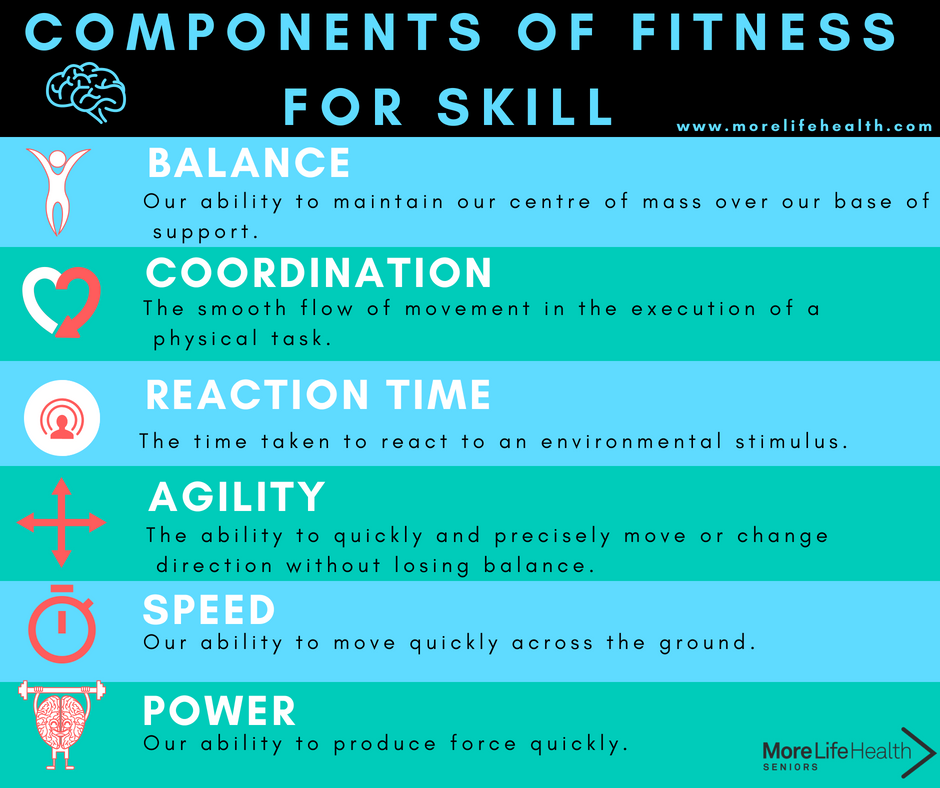
While the health-related components are crucial for overall well-being, some also consider skill-related components. These are important for athletic performance and learning motor skills. They don’t directly impact health in the same way as the above five, but they contribute to being proficient in sports and physical activities.
1. Agility
Agility is the ability to change the body’s position quickly and to control the movement of the whole body.
Why it Matters:
- Sports Performance: Essential for sports like soccer, basketball, and tennis where quick changes in direction are needed.
- Avoiding Obstacles: Helps you navigate your environment safely and efficiently.
Measuring It:
- Shuttle Run: Running back and forth between markers in the shortest time.
- Agility T-Test: Performing a specific pattern of movement.
2. Balance
Balance is the ability to maintain equilibrium while stationary or moving.
Why it Matters:
- Stability: Prevents falls and improves confidence during movement.
- Coordination: Works hand-in-hand with other skill-related components.
- Everyday Life: Crucial for tasks like walking on uneven surfaces or carrying items.
Measuring It:
- Single Leg Stance: Standing on one leg for as long as possible.
- Rhomberg Test: Standing with feet together and eyes closed.
3. Coordination
Coordination is the ability to use different parts of the body together smoothly and efficiently.
Why it Matters:
- Motor Skill Development: Crucial for learning and performing complex movements.
- Athletic Prowess: Enhances performance in sports requiring hand-eye or foot-eye coordination.
Measuring It:
- Ball Toss Test: Catching a ball thrown against a wall.
- Jumping Jacks: Performing them smoothly and in rhythm.
4. Power
Power is the ability to exert maximum force in an explosive burst of movement. It combines strength and speed.
Why it Matters:
- Athletic Movements: Crucial for jumping, throwing, and sprinting.
- Explosive Strength: Used in activities like weightlifting and martial arts.
Measuring It:
- Vertical Jump Test: Measuring how high you can jump.
- Shot Put Throw: Measuring the distance of a thrown shot put.
5. Reaction Time
Reaction time is the ability to respond quickly to a stimulus.
Why it Matters:
- Sports: Essential for reacting to the ball, an opponent, or a starting signal.
- Safety: Quick reactions can prevent accidents, like stepping out of the way of a falling object.
Measuring It:
- Ruler Drop Test: Measuring how quickly you can catch a falling ruler.
- Computerized Reaction Tests: Using visual or auditory stimuli.
6. Speed
Speed is the ability to move rapidly.
Why it Matters:
- Athletics: Key for sprinting and many sports.
- Daily Life: Helps in quickly moving out of the way or catching a bus.
Measuring It:
- Sprint Tests: Measuring the time it takes to run a specific distance (e.g., 100 meters).
The Interconnectedness of Fitness Domains
It’s important to recognize that these components of fitness don’t exist in isolation. They are interconnected fitness domains that work together. For instance, good cardiovascular endurance will help improve muscular endurance, and flexibility can enhance agility. Developing one area often positively impacts others. These fitness parameters are all part of a larger picture of physical health.
Levels of Fitness: A Continuous Journey
It’s also worth noting that there are different levels of fitness. Not everyone needs to be an elite athlete, but everyone can benefit from improving their fitness. Whether you’re aiming to improve your general well-being, manage a health condition, or excel in a sport, understanding these dimensions of fitness helps you create a balanced and effective training plan.
Why These Elements of Health Matter So Much
The importance of these elements of health cannot be overstated. Regular physical activity that targets these different physical fitness categories is a cornerstone of a healthy lifestyle.
Here’s a summary of why focusing on these aspects of physical fitness is so critical:
- Disease Prevention: As mentioned, strong cardiovascular health, healthy body composition, and muscular strength all play a role in preventing chronic diseases like heart disease, type 2 diabetes, and certain cancers.
- Improved Mental Health: Exercise is a powerful tool for reducing stress, anxiety, and depression. It boosts mood and cognitive function.
- Increased Longevity and Quality of Life: People who are more physically fit tend to live longer and enjoy a higher quality of life, with more independence and fewer limitations as they age.
- Enhanced Functional Capacity: Being fit means you can handle the physical demands of everyday life, work, and leisure activities more effectively.
- Better Sleep: Regular physical activity can lead to more restful sleep, which is vital for overall health.
- Stronger Bones and Muscles: This reduces the risk of osteoporosis and falls, especially important for older adults.
Creating a Balanced Fitness Plan
To achieve optimal health, it’s beneficial to incorporate activities that work on all the key health-related fitness components. Here’s a simple way to think about it:
| Component of Fitness | How to Improve It | Example Activities |
|---|---|---|
| Cardiovascular Endurance | Sustained aerobic activity that elevates heart rate. | Running, swimming, cycling, brisk walking, dancing, hiking. |
| Muscular Strength | Lifting heavier weights for fewer repetitions or performing resistance exercises. | Weightlifting, squats, lunges, push-ups, pull-ups, resistance band exercises. |
| Muscular Endurance | Performing lower-weight resistance exercises for more repetitions or holding positions. | Pilates, bodyweight exercises, circuit training, endurance strength training. |
| Flexibility | Stretching and movements that increase range of motion. | Yoga, dynamic stretching, static stretching, Pilates, foam rolling. |
| Body Composition | A combination of a healthy diet and regular exercise (both cardio and strength). | Balanced nutrition, regular aerobic exercise, strength training. |
For skill-related components, specific drills and practice are key. For example, agility drills for agility, balance exercises for balance, and sports practice for coordination, power, reaction time, and speed.
Frequently Asked Questions (FAQ)
Q1: How many main components of fitness are there?
A1: Typically, there are five main health-related fitness components: cardiovascular endurance, muscular strength, muscular endurance, flexibility, and body composition. Some also include skill-related components.
Q2: Are all components of fitness equally important?
A2: While all components of fitness contribute to a healthy lifestyle, the health-related fitness components are generally considered the most critical for preventing chronic diseases and promoting overall well-being. Skill-related components are more focused on athletic performance.
Q3: Can I improve my fitness by focusing on just one component?
A3: While focusing on one area can yield improvements, a balanced approach that addresses multiple aspects of physical fitness is best for comprehensive health and well-being. Neglecting one component can hinder progress in others.
Q4: What’s the difference between muscular strength and muscular endurance?
A4: Muscular strength is the maximum force a muscle can exert once, while muscular endurance is the ability of a muscle to perform repeated contractions over time.
Q5: How often should I train each component of fitness?
A5: General guidelines suggest aiming for at least 150 minutes of moderate-intensity or 75 minutes of vigorous-intensity aerobic activity per week for cardiovascular endurance. Strength training should be done at least two days a week, targeting major muscle groups. Flexibility exercises can be done daily. Body composition is influenced by diet and consistent exercise across all components.
By dedicating attention to these various dimensions of fitness, you invest in a healthier, more energetic, and capable life.