
The question of “how old is yoga?” is a profound one, with its roots stretching back thousands of years, predating many established civilizations. Yoga, in its most ancient origins, is not merely a physical practice but a holistic system of spiritual, mental, and physical discipline originating in ancient India.
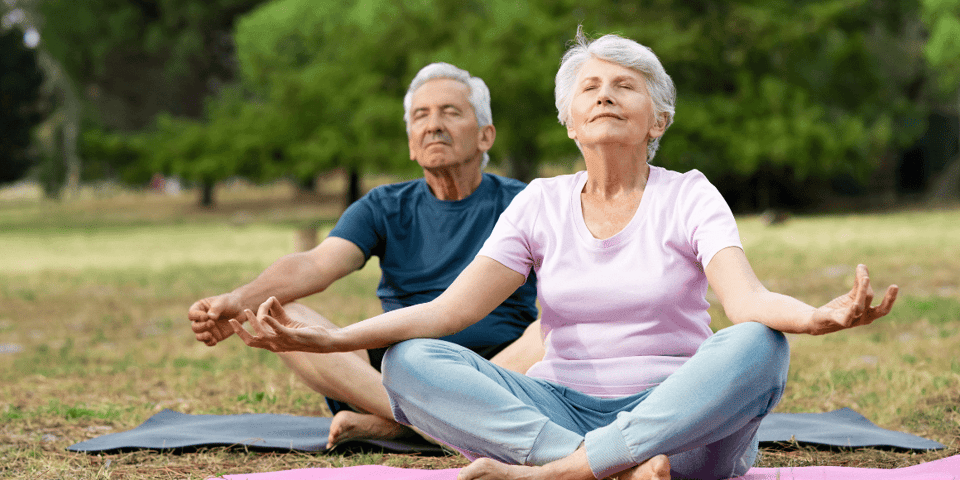
Image Source: www.wesleylife.org
Deciphering Yoga’s Antiquity
The journey to pinpoint the precise age of yoga is like tracing the winding paths of an ancient river. While modern yoga often conjures images of sleek studios and athletic poses, its true history is far richer and more deeply embedded in spiritual and philosophical traditions. Fathoming the age of yoga requires delving into ancient texts, archaeological findings, and scholarly interpretations of yoga’s past.
The Earliest Whispers: Pre-Vedic Roots
While definitive proof is elusive, many scholars believe that the seeds of yoga were sown long before the Vedic period. These pre-Vedic traditions likely involved meditative practices, asceticism, and a deep connection with nature. Archaeological evidence, though sparse, hints at practices that could be considered proto-yogic.
Indus Valley Civilization Clues
The Indus Valley Civilization, flourishing between 3300 and 1300 BCE, offers some intriguing, albeit debated, insights. Seals discovered at sites like Mohenjo-Daro depict figures in seated postures that bear a striking resemblance to yogic asanas (poses).
- The “Pashupati Seal”: This famous seal shows a seated figure with multiple heads, surrounded by animals, in a posture often interpreted as meditative or yogic. The crossed legs and upright torso suggest a controlled and focused state.
- Other Figurines: Small terracotta figurines have also been found depicting individuals in cross-legged positions, further fueling speculation about early contemplative practices.
It’s crucial to acknowledge that these findings are open to interpretation. However, they provide a compelling argument for the existence of contemplative or physical disciplines that could be considered precursors to yoga. This suggests yoga’s origins are deeply embedded in the earliest human attempts to connect with the divine and understand the self.
The Vedic Era: The Dawn of Yogic Texts
The Vedic period (roughly 1500-500 BCE) marks a more concrete stage in the history of yoga. The Vedas, ancient sacred texts of Hinduism, contain hymns, rituals, and philosophical discussions that allude to practices that would later evolve into yoga.
The Rigveda and Early Concepts
The Rigveda, the oldest of the Vedas, contains references to ascetics and mystics who possessed extraordinary powers, hinting at disciplined mental and physical control.
- “Munis”: These ascetics, described in the Rigveda, were known for their ecstatic states, long periods of silence, and mastery over their senses. Their practices, while not explicitly called yoga, shared commonalities with yogic discipline.
- “Vratyas”: Another group mentioned are the “Vratyas,” who engaged in austere practices and exhibited control over their bodies and minds.
While the Vedas don’t detail specific asanas or pranayama (breathing techniques) as we know them today, they lay the philosophical groundwork. They speak of cosmic order, the nature of reality, and the human quest for liberation, all central themes in yoga. The age of yoga is undeniably tied to this foundational period.
The Upanishadic Period: Yoga’s Philosophical Flourishing
The Upanishads (circa 800-200 BCE) are philosophical texts that represent a significant development in Indian thought and provide more explicit descriptions of yogic practices and philosophies. They delve deeper into the concepts of Brahman (the ultimate reality) and Atman (the self), and how to achieve their union.
Key Upanishadic Ideas
- Meditation and Concentration: The Upanishads emphasize the importance of dhyana (meditation) and dharana (concentration) as means to transcend the senses and perceive ultimate reality.
- Asceticism and Self-Discipline: They advocate for self-control, detachment from worldly desires, and the practice of austerities as pathways to spiritual knowledge.
- The Concept of Yoga: The word “yoga” itself begins to appear more frequently in the Upanishads, referring to a disciplined path to union with the divine. The Svetashvatara Upanishad, in particular, is a landmark text explicitly discussing yoga.
The Upanishads are critical in tracing yoga’s timeline, showing a clear evolution from Vedic rituals to a more internalized, philosophical, and practice-oriented system. This period solidifies yoga’s position as a path to spiritual realization.
The Classical Yoga Era: Patanjali’s Synthesis
The Classical Yoga period is perhaps the most well-defined stage in yoga’s history, primarily due to the monumental work of Sage Patanjali.
The Yoga Sutras of Patanjali
The Yoga Sutras of Patanjali, composed likely between 200 BCE and 400 CE, is the foundational text of Classical Yoga. It systematizes yogic philosophy and practice into a coherent framework.
The Eight Limbs of Yoga (Ashtanga Yoga)
Patanjali’s most significant contribution is the articulation of Ashtanga Yoga, an eight-limbed path designed to guide practitioners towards Samadhi (enlightenment or liberation).
| Limb | Sanskrit Term | Description |
|---|---|---|
| Ethical Foundations | Yama | Five restraints: non-violence, truthfulness, non-stealing, continence, non-possessiveness. |
| Niyama | Five observances: purity, contentment, austerity, self-study, surrender to a higher power. | |
| Physical & Energetic Practices | Asana | Steady and comfortable posture; traditionally a seated meditation pose. |
| Pranayama | Control of breath or life force; breath regulation techniques. | |
| Internal Disciplines | Pratyahara | Withdrawal of the senses from external objects. |
| Dharana | Concentration; focusing the mind on a single point. | |
| Dhyana | Meditation; sustained, unbroken concentration. | |
| Ultimate Goal | Samadhi | Deep meditative absorption; a state of blissful awareness and union with the divine. |
The Yoga Sutras provide a comprehensive guide, and understanding its context helps in grasping the true age of yoga and its intended purpose beyond physical exercise. The yoga development outlined by Patanjali has profoundly shaped yoga’s evolution.
Patanjali’s Definition of Yoga
Crucially, Patanjali defines yoga in the second Sutra (Y.S. 1.2): “Yogas chitta vritti nirodhah” – “Yoga is the cessation of the fluctuations of the mind.” This definition underscores that yoga’s primary goal is mental and spiritual, with the physical aspects serving as a support.
Post-Classical Yoga: Diversification and Tantra
Following Patanjali, yoga continued to evolve, branching into various schools and incorporating new philosophical and practical elements.
The Bhagavad Gita: Yoga as Devotion and Action
The Bhagavad Gita, likely composed between the 5th and 2nd centuries BCE, is a seminal text that presents yoga in a more accessible and integrated manner, particularly within the context of daily life and duty.
Paths of Yoga in the Gita
The Gita outlines several prominent paths of yoga:
- Karma Yoga (Yoga of Action): Performing one’s duties without attachment to the results. This path emphasizes selfless service.
- Bhakti Yoga (Yoga of Devotion): Cultivating intense love and devotion towards the divine.
- Jnana Yoga (Yoga of Knowledge): Pursuing wisdom and self-inquiry to discriminate between the real and the unreal.
- Raja Yoga (Royal Yoga): Primarily refers to Patanjali’s Ashtanga Yoga, focusing on mental control and meditation.
The Bhagavad Gita significantly expanded the concept of yoga, making it relevant to householders and those engaged in worldly activities. This broadened the scope of yoga’s appeal and cemented its place in the cultural fabric of India.
Tantra and Hatha Yoga: The Rise of Physical Practices
The Tantric tradition, which flourished from around the 5th century CE onwards, brought a new dimension to yoga, emphasizing the body as a vehicle for spiritual growth. This led to the development of Hatha Yoga.
Hatha Yoga Pradipika and other Texts
Key texts like the Hatha Yoga Pradipika (circa 15th century CE) detail specific asanas, pranayama, mudras (gestures), and bandhas (energy locks) intended to purify the body and prepare it for deeper meditation and spiritual realization.
- Asana Development: While Patanjali’s asana primarily referred to a stable seated posture for meditation, Hatha Yoga introduced a wider array of postures, often designed to invigorate the body and balance energy channels (nadis).
- Pranayama’s Importance: Hatha Yoga placed a strong emphasis on pranayama as a means to control vital energy (prana) and awaken the kundalini (serpent power).
- Focus on the Physical Body: Hatha Yoga brought a more pronounced focus on the physical body, preparing it to withstand the rigүүн rigours of prolonged meditation and spiritual discipline. This marked a significant point in yoga’s development.
The emergence of Hatha Yoga represented a shift, making yoga more accessible to a broader range of people and laying the groundwork for the physical yoga popular today.
Yoga’s Evolution: From Ancient Practice to Global Phenomenon
The history of yoga is not static; it’s a dynamic evolution that has seen continuous adaptation and reinterpretation.
Medieval and Colonial Influences
During the medieval period, yoga traditions continued to flourish, often within monastic settings and guru-disciple lineages. The arrival of British colonialism in India brought yoga to the attention of the West, though often through a lens of exoticism or as a curiosity.
Early Western Encounters
- Swami Vivekananda: His lectures in the late 19th century introduced Vedanta and Yoga philosophy to the West, sparking interest in its spiritual and philosophical aspects.
- Paramahansa Yogananda: His book “Autobiography of a Yogi” (1946) played a pivotal role in popularizing Kriya Yoga and yogic philosophy in the mid-20th century.
The 20th Century Renaissance: Modern Yoga Emerges
The 20th century witnessed a significant resurgence and transformation of yoga in India, driven by influential teachers who adapted and refined practices for a modern audience.
Key Figures in Modern Yoga
- Tirumalai Krishnamacharya: Often called the “father of modern yoga,” Krishnamacharya revived and reinterpreted many traditional yogic practices, emphasizing the connection between breath and movement. He trained several influential students who would go on to spread yoga globally.
- B.K.S. Iyengar: A student of Krishnamacharya, Iyengar developed a precise and systematic approach to asana, emphasizing alignment, the use of props, and therapeutic applications.
- K. Pattabhi Jois: Another student of Krishnamacharya, Jois popularized Ashtanga Vinyasa Yoga, a dynamic and flowing style characterized by a set sequence of postures linked by breath.
- Indra Devi: A Russian-born woman who became one of Krishnamacharya’s earliest Western students, she played a crucial role in bringing yoga to Hollywood and influential circles in the West.
These teachers and their disciples were instrumental in shaping the yoga we recognize today, particularly its emphasis on physical postures. This era saw a dramatic yoga evolution, adapting ancient roots for contemporary life.
The Globalization of Yoga
From the mid-20th century onwards, yoga’s popularity surged globally. It transitioned from a niche spiritual practice to a mainstream wellness activity, embraced for its physical, mental, and emotional benefits. This globalization has led to further diversification, with countless styles and approaches emerging.
Fathoming Yoga’s True Age: A Continuous Journey
So, how old is yoga? The answer is not a single number but a spectrum.
- Pre-Vedic whispers: Potentially thousands of years before recorded history.
- Vedic references: Early mentions dating back to around 1500 BCE.
- Upanishadic descriptions: More explicit philosophical and practical details from around 800 BCE.
- Classical Yoga (Patanjali): Systematized around 200 BCE – 400 CE.
- Hatha Yoga development: Emergence of specific physical practices from around the 15th century CE.
- Modern Yoga popularization: Significant global spread from the mid-20th century.
The age of yoga is not just about chronology; it’s about the enduring relevance of its core principles. From its ancient origins to its modern manifestations, yoga has always been about exploring the self, connecting with something larger, and cultivating a harmonious balance between body, mind, and spirit.
The Enduring Legacy of Yoga’s Roots
The yoga we practice today, in its myriad forms, is a testament to the resilience and adaptability of an ancient tradition. While the physical aspects have gained prominence in the West, the profound philosophical and spiritual underpinnings remain the heart of yoga. Uncovering the ancient secrets of yoga involves recognizing its deep history and appreciating its continuous evolution. The yoga antiquity is vast, offering a rich tapestry of wisdom for modern seekers.
Frequently Asked Questions About Yoga’s Age
Q1: Is yoga just about physical postures?
No, yoga is a comprehensive system that encompasses ethical guidelines, breath control, meditation, and philosophical principles aimed at spiritual growth and mental clarity. Physical postures (asanas) are just one part of the practice.
Q2: When did yoga begin?
The exact start date is unknown. Evidence suggests practices akin to yoga existed even before the Vedic period (pre-3000 BCE). The earliest written references are found in the Vedas (around 1500 BCE), with more detailed philosophical and practical accounts emerging in the Upanishads (around 800 BCE) and Patanjali’s Yoga Sutras (between 200 BCE and 400 CE).
Q3: Are modern yoga styles related to ancient yoga?
Yes, modern yoga styles are descendants of ancient traditions. While the emphasis on physical postures has become more prominent in recent times, they are still rooted in the philosophy and practices developed over millennia. Teachers like Krishnamacharya and his students played a crucial role in adapting these ancient techniques for contemporary practitioners.
Q4: What is the oldest known yoga text?
While speculative, the Vedas contain the earliest allusions to yogic concepts. However, the Upanishads, particularly the Svetashvatara Upanishad, and Patanjali’s Yoga Sutras are considered the most significant early texts that systematically describe yogic philosophy and practice.
Q5: How has yoga changed over time?
Yoga has undergone significant evolution. Initially focused on meditation and spiritual discipline, it later incorporated a greater emphasis on physical postures and breathwork (Hatha Yoga). In the 20th century, it was further adapted and popularized globally, leading to the diverse range of styles seen today. The core aim of inner transformation, however, remains consistent.