
Many people wonder, “How long to hold yoga poses?” The answer isn’t one-size-fits-all. Generally, holding yoga poses for 30 seconds to one minute is a good starting point for most beginners. However, the ideal yoga pose duration depends on several factors, including your experience level, the type of pose, and your personal goals. This article will delve into the nuances of yoga pose timing and explore the best duration for yoga poses to maximize your practice.
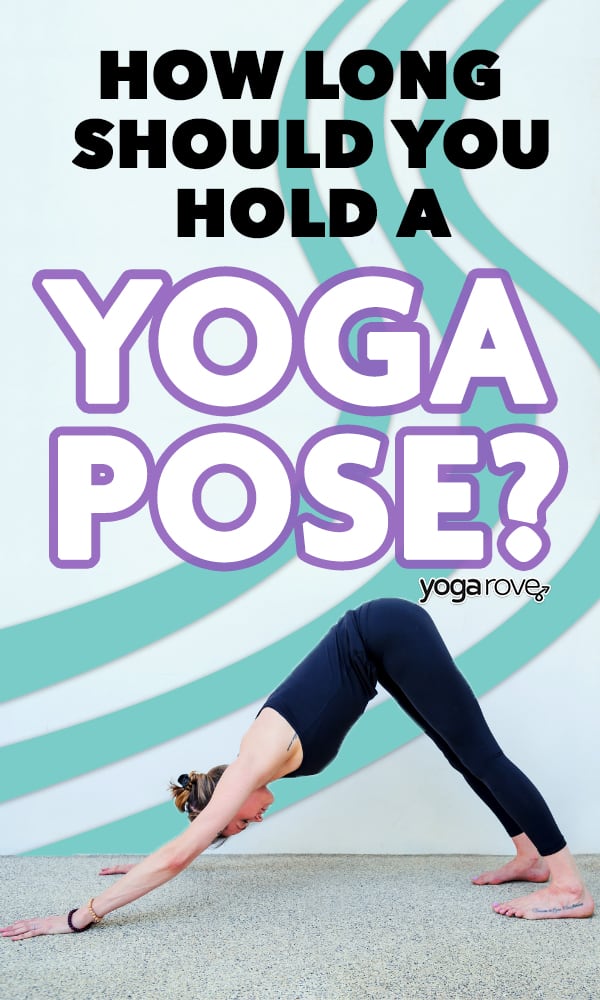
Image Source: yogarove.com
The Science Behind Holding Yoga Postures
When we talk about holding yoga postures, we’re referring to yoga pose retention. This is a crucial element in building strength, flexibility, and mental focus. The duration you stay in a pose directly influences the physiological and energetic benefits you receive.
Building Strength and Endurance
Holding a pose, especially those that require muscular engagement like Warrior II or Plank, builds muscular strength and endurance. When you hold a pose for a sustained period, your muscles work against gravity and your own body weight. This constant tension signals your muscle fibers to adapt and grow stronger.
- Muscle Fiber Recruitment: Longer holds engage more muscle fibers, including slow-twitch fibers which are responsible for endurance.
- Increased Blood Flow: Holding a pose can increase blood flow to the muscles, delivering oxygen and nutrients, which aids in muscle recovery and growth.
- Metabolic Benefits: Sustained muscular effort can contribute to increased calorie expenditure and improved metabolism.
Enhancing Flexibility and Range of Motion
Flexibility gains are often realized through sustained stretches. When you hold a pose that lengthens muscles, like Triangle Pose or Pigeon Pose, you allow the connective tissues to gradually release tension.
- Connective Tissue Adaptation: Holding stretches for longer periods allows the fascia and ligaments to relax and lengthen, improving your overall range of motion over time.
- Nervous System Relaxation: Staying in a stretch can help calm the nervous system, allowing the muscles to release more deeply. This is often referred to as the stretch reflex, and with patience, it can be overcome.
- Improved Joint Health: By increasing flexibility around the joints, you can improve their mobility and reduce the risk of injury.
Cultivating Mental Focus and Mindfulness
The act of holding a pose is also a powerful mental exercise. It requires concentration, breath awareness, and the ability to manage discomfort. This is where yoga practice timing becomes particularly significant for mental development.
- Breath-Body Connection: Sustained holds encourage a deeper connection to your breath, which is central to a mindful yoga practice. You learn to use your breath to support your body.
- Present Moment Awareness: Holding a pose demands your full attention. This practice of staying present helps to quiet the mental chatter and cultivate mindfulness.
- Developing Resilience: Learning to stay with a pose, even when it feels challenging, builds mental resilience and the ability to cope with discomfort off the mat.
Factors Influencing Optimal Hold Time Yoga Poses
Determining the best duration for yoga poses is a personal journey. Several key factors come into play:
1. Your Experience Level
- Beginners: If you’re new to yoga, shorter holds are generally recommended. This allows you to focus on proper alignment and avoid overexertion. Starting with 15-30 seconds per pose is a good way to build foundational strength and body awareness.
- Intermediate Practitioners: As you gain strength and familiarity, you can gradually increase your hold times to 30-60 seconds. This is often when you start to feel the deeper benefits of muscle engagement and sustained stretching.
- Advanced Practitioners: Experienced yogis may hold poses for several minutes, especially in restorative or power yoga styles. Longer holds can deepen the physical and energetic effects of the practice.
2. Type of Pose
Different poses target different aspects of your physical and energetic body, and thus require different holding times.
- Standing Poses (e.g., Warrior II, Triangle Pose): These poses often require sustained muscular effort to maintain stability and alignment. Holding them for 30-60 seconds can build significant leg and core strength.
- Balancing Poses (e.g., Tree Pose, Eagle Pose): Balancing poses benefit from shorter, more focused holds. Holding for 15-30 seconds per side can improve focus and proprioception without excessive fatigue.
- Seated Poses (e.g., Staff Pose, Seated Forward Bend): Seated poses often involve deeper stretches. Holding for 30-90 seconds allows ample time for the muscles and connective tissues to release.
- Inversions (e.g., Downward-Facing Dog, Shoulderstand): The duration in inversions can vary. Downward-Facing Dog can be held for 30 seconds to a minute as a transition or longer as a resting pose. Shoulderstand, when practiced safely, can be held for 1-5 minutes, but this requires significant preparation and experience.
- Backbends (e.g., Cobra Pose, Bow Pose): Backbends require careful engagement and gradual deepening. Holding for 15-30 seconds allows you to focus on breath and spinal articulation without straining.
3. Your Personal Goals
Your intentions for your practice will also shape how long to stay in a yoga pose.
- Strength Building: For strength, focus on poses that engage muscles and hold them until you feel a sense of fatigue or intensity, typically 30-60 seconds.
- Flexibility and Deep Stretching: To increase flexibility, hold poses that stretch muscles for longer periods, potentially 60-90 seconds or even more, focusing on breath and release.
- Stress Reduction and Relaxation: In restorative or Yin yoga, poses are held for extended durations (5-10 minutes or more) to allow deep relaxation and release of tension.
- Mental Clarity and Focus: Holding poses for a consistent duration, even if shorter, and maintaining breath awareness can greatly enhance mental focus.
4. Breath Awareness (Pranayama)
Your breath is your guide. The quality and depth of your breath can inform how long you stay in a pose.
- Smooth, Deep Breaths: If you can maintain a smooth, even breath throughout a pose, it’s generally a sign that you can hold it comfortably and safely.
- Short, Shallow Breaths or Holding Breath: If your breath becomes choppy, shallow, or you find yourself holding your breath, it’s a signal to ease out of the pose or adjust your alignment. This indicates you might be pushing too hard.
- Using Breath as a Timer: Some practitioners count breaths to determine their hold time. For example, 5-10 deep, diaphragmatic breaths can be a good guideline for many poses.
Common Recommendations for Yoga Pose Duration
When exploring how long to hold yoga poses, it’s helpful to consider some general guidelines. These are starting points and should always be adapted to your individual needs and comfort.
Table: General Yoga Pose Hold Times
| Pose Type | Beginner (Seconds) | Intermediate (Seconds) | Advanced (Seconds) | Focus |
|---|---|---|---|---|
| Standing Poses | 15-30 | 30-60 | 60-120+ | Strength, Stability, Endurance |
| Balancing Poses | 15-20 | 20-30 | 30-45 | Focus, Proprioception, Stability |
| Seated Stretches | 30-45 | 45-75 | 60-120+ | Flexibility, Deep Tissue Release |
| Gentle Backbends | 15-20 | 20-30 | 30-45 | Spinal Mobility, Chest Opening |
| Inversions (prep) | 15-30 | 30-60 | 60+ | Strength, Body Awareness |
| Restorative/Yin | 3-5 minutes | 5-10 minutes | 5-15 minutes | Deep Relaxation, Fascial Release |
Note: “Advanced” here refers to the duration of the hold, not necessarily the complexity of the pose itself.
Exploring Different Yoga Styles and Their Timing
The style of yoga you practice significantly influences yoga pose timing.
- Vinyasa/Flow Yoga: This style emphasizes smooth transitions between poses, often linked with breath. Holds are typically shorter, 3-5 breaths (approximately 15-30 seconds), allowing for a dynamic, flowing practice. The focus is on movement and breath synchronization.
- Hatha Yoga: Hatha yoga generally involves holding poses for longer durations than Vinyasa, often 5-10 breaths (30-60 seconds). This allows for greater focus on alignment and experiencing the pose’s energetic effects. Hatha is a great style to experiment with how long to stay in yoga poses.
- Iyengar Yoga: Known for its meticulous attention to alignment, Iyengar yoga utilizes props extensively and involves holding poses for significant periods, often several minutes. The emphasis is on precision and deep exploration of each posture.
- Yin Yoga: This passive style targets deep connective tissues. Poses are held for extended periods, typically 3-5 minutes, or even longer. The goal is to apply moderate stress to the tissues to increase flexibility and improve joint mobility. Holding static yoga poses for this duration is the hallmark of Yin.
- Restorative Yoga: Restorative yoga uses props to support the body in gentle poses, allowing for deep relaxation. Holds are long, often 5-20 minutes, promoting healing and stress reduction. The focus here is on effortless stillness.
Techniques for Holding Yoga Poses Effectively
To get the most out of your yoga pose duration, consider these techniques:
1. Focus on Your Breath
As mentioned, your breath is your primary guide.
- Ujjayi Breath: This gentle, ocean-like breath can help regulate your nervous system and maintain focus during longer holds.
- Breath Counts: Using breath counts (e.g., 5 breaths, 10 breaths) is a common and effective way to measure your yoga pose retention.
2. Engage Your Bandhas
Bandhas are energetic locks in the body that help stabilize and focus your practice.
- Mula Bandha (Root Lock): Gentle engagement of the pelvic floor muscles.
- Uddiyana Bandha (Abdominal Lock): Drawing the navel towards the spine.
- Jalandhara Bandha (Throat Lock): Gently tucking the chin towards the chest.
Engaging these bandhas can provide a subtle internal support system, allowing you to hold poses more comfortably and with greater awareness.
3. Listen to Your Body
This is perhaps the most important aspect of yoga practice timing. Your body will tell you when it’s time to hold longer or release a pose.
- Discomfort vs. Pain: Learn to differentiate between muscular fatigue or the stretch sensation (discomfort) and sharp, shooting pain. Never push into pain.
- Energy Levels: Pay attention to your energy throughout the practice. If you feel drained by holding poses too long, shorten your holds. If you feel energized, you might be ready for longer durations.
4. Use Props
Props are invaluable tools for supporting your body and allowing you to hold poses for longer durations, especially if flexibility or strength is a limitation.
- Blocks: Use blocks under your hands in poses like Triangle Pose or Forward Folds to bring the ground closer.
- Straps: Use straps to extend your reach in poses like Seated Forward Bend or Dancer’s Pose.
- Bolsters: Bolsters are essential in restorative yoga for full body support, enabling you to relax deeply in poses.
5. Consistency and Gradual Progression
The key to seeing results from your yoga pose timing is consistency. Gradually increase your hold times as your body adapts. Don’t try to jump from holding poses for 15 seconds to 5 minutes overnight.
Common Mistakes in Holding Yoga Poses
Even with the best intentions, some common pitfalls can hinder your progress when it comes to how long to hold yoga poses.
1. Holding Too Long and Sacrificing Alignment
One of the biggest mistakes is to push for a long hold at the expense of proper form. If your alignment starts to break down, it’s a sign you’ve held the pose for too long for your current capacity. This can lead to strain and injury. Prioritize correct form over extended yoga pose retention.
2. Holding Too Short to Feel Benefits
Conversely, holding poses for too short a duration means you might not be giving your body enough time to respond. In Vinyasa, quick transitions are common, but in other styles, a minimal hold won’t build significant strength or flexibility. Aim for enough time to feel sensation.
3. Forgetting About Your Breath
When you’re focused on how long to stay in yoga poses, it’s easy to hold your breath or breathe shallowly. This creates tension. Always return your awareness to your breath as your anchor.
4. Pushing Through Pain
Pain is a signal that something is wrong. Ignoring pain to hold a pose longer is dangerous. It’s crucial to distinguish between a beneficial stretch or muscle engagement and actual pain.
5. Inconsistent Practice
Trying to hold poses longer without a consistent practice is like trying to run a marathon without training. Regular practice allows your body and mind to adapt and build the capacity for longer holds.
Frequently Asked Questions (FAQ)
Q1: How long should a beginner hold a yoga pose?
A1: Beginners should aim to hold poses for 15-30 seconds. The focus should be on learning proper alignment and building foundational strength and body awareness.
Q2: Is it better to hold yoga poses longer or move faster?
A2: It depends on the style of yoga and your goals. Vinyasa yoga involves faster transitions, while Hatha or Yin yoga emphasizes longer holds. For strength and flexibility, longer holds are often more beneficial.
Q3: What does it mean if I can’t hold a yoga pose for long?
A3: It likely means your muscles are not yet conditioned for that duration or intensity. This is completely normal! Focus on shorter holds with good alignment, and gradually increase your time as your strength and flexibility improve.
Q4: How many breaths should I hold a yoga pose?
A4: A common guideline is to hold poses for 5-10 deep breaths. For more challenging poses or for greater depth, you might extend this to 10-15 breaths. Always listen to your body and breath.
Q5: Can holding yoga poses for too long be harmful?
A5: Yes, if you sacrifice alignment, push into pain, or hold poses for longer than your body can safely manage, it can lead to injury. It’s important to find a balance and listen to your body’s signals.
Conclusion
The question of how long to hold yoga poses for the best results is nuanced. There’s no single magic number. By considering your experience level, the specific pose, your personal goals, and most importantly, your breath and body’s feedback, you can discover the yoga pose duration that serves you best. Experiment with different hold times, prioritize alignment and breath, and be patient with your progress. The journey of mastering holding yoga postures is a continuous exploration of your physical and mental capabilities. Ultimately, your yoga practice timing should lead to greater strength, flexibility, and inner peace.