
The question of how many yoga sutras are there is fundamental for anyone delving into the rich philosophical landscape of yoga. The answer is that the foundational text, Patanjali’s Yoga Sutras, contains a specific number of aphorisms, commonly understood to be 195, meticulously organized into four distinct sections of yoga sutras. This guide will explore the total yoga sutras, provide a detailed yoga sutras breakdown, and shed light on the profound meaning of yoga sutras for modern practitioners.
The number of yoga sutras is a point of scholarly discussion, with some scholars suggesting slightly different counts due to variations in manuscript traditions and interpretations. However, the widely accepted and most commonly referenced number for Patanjali’s Yoga Sutras is 195. This comprehensive collection of aphorisms forms the bedrock of classical yoga, offering a systematic approach to mental discipline and spiritual liberation.
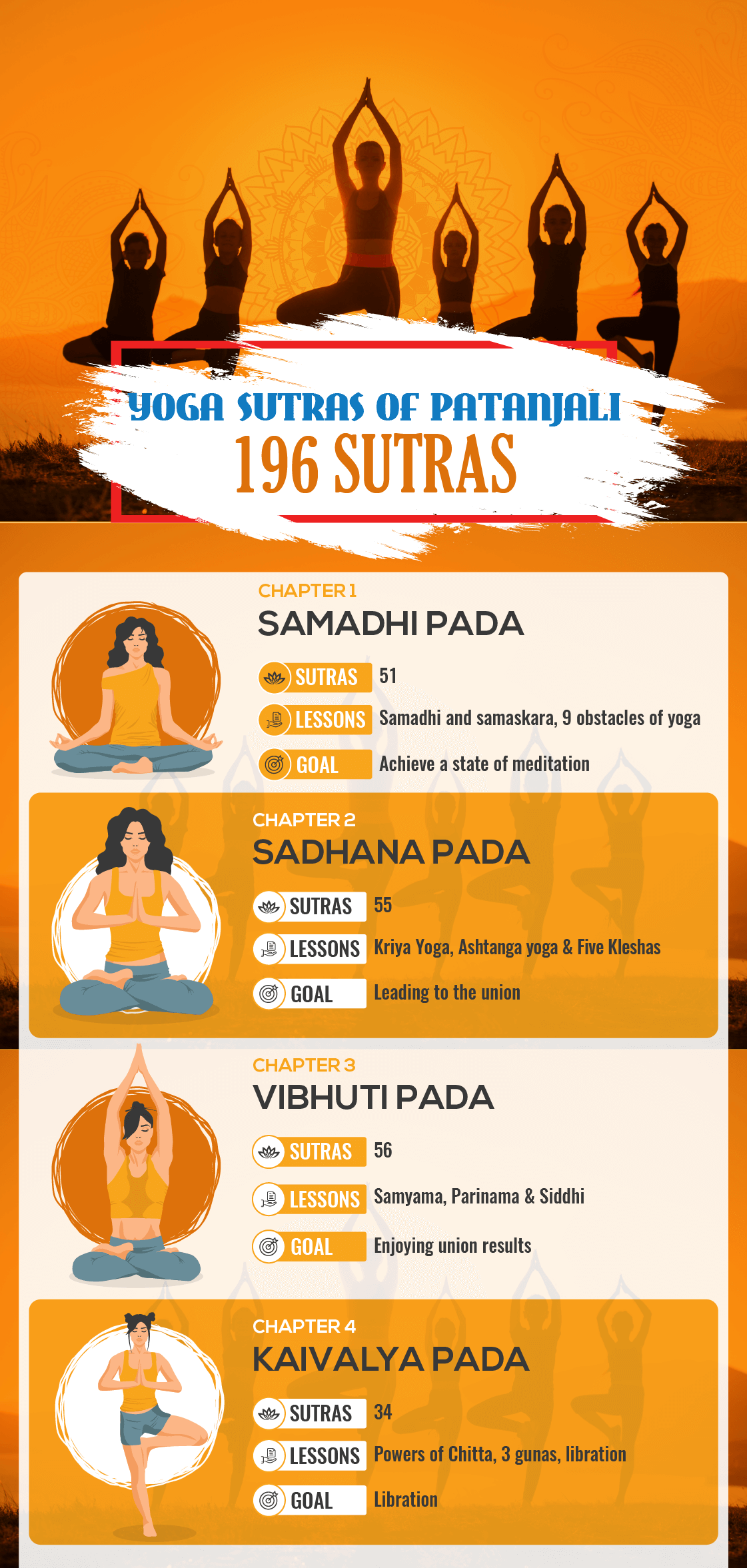
Image Source: fitsri.com
The Structure of Patanjali’s Yoga Sutras
Patanjali’s Yoga Sutras are not just a random collection of sayings; they are arranged in a logical and progressive manner, designed to guide the practitioner from the initial stages of understanding to the ultimate realization of consciousness. The yoga sutras breakdown reveals four primary chapters of yoga sutras, each building upon the preceding one. These sections of yoga sutras offer a complete framework for the study of yoga sutras, covering the theory and practice of yoga.
Chapter 1: Samadhi Pada (Chapter on Contemplation)
The first chapter, Samadhi Pada, introduces the core concepts of yoga. It begins with the iconic definition of yoga: “Yogas citta vritti nirodhah” – Yoga is the cessation of the fluctuations of consciousness. This section delves into the nature of consciousness, the obstacles to its stillness, and the various states of samadhi, or profound meditative absorption. It lays the groundwork for the entire study of yoga sutras by defining the goal and the initial challenges.
Contents of Yoga Sutras – Samadhi Pada:
- Defining Yoga
- The nature of consciousness (Citta)
- The modifications of consciousness (Vritti)
- The means to control these modifications (Abhyasa and Vairagya)
- Obstacles to progress
- States of Samadhi
Chapter 2: Sadhana Pada (Chapter on Practice)
The second chapter, Sadhana Pada, shifts the focus to the practical application of yoga. It introduces the eight limbs of yoga, known as Ashtanga Yoga, which provide a step-by-step method for achieving the state of yoga described in the first chapter. This section details the ethical principles (Yamas and Niyamas), physical postures (Asana), breath control (Pranayama), sense withdrawal (Pratyahara), and concentration (Dharana).
Contents of Yoga Sutras – Sadhana Pada:
- The Kleshas (afflictions or obscurations)
- Karma and its consequences
- The eight limbs of yoga:
- Yamas (ethical restraints)
- Niyamas (observances)
- Asana (posture)
- Pranayama (breath control)
- Pratyahara (sense withdrawal)
- Dharana (concentration)
- Dhyana (meditation)
- Samadhi (absorption)
- The practice of Kriya Yoga (Purification Yoga)
Chapter 3: Vibhuti Pada (Chapter on Powers)
The third chapter, Vibhuti Pada, explores the advanced stages of yoga practice, particularly concentration (Dharana), meditation (Dhyana), and absorption (Samadhi). It discusses the development of psychic powers, or siddhis, that can arise from deep meditative practices. However, Patanjali cautions against attachment to these powers, emphasizing that the ultimate goal remains liberation. This chapter is a crucial part of the yoga sutras classification of advanced yogic experiences.
Contents of Yoga Sutras – Vibhuti Pada:
- Dharana, Dhyana, and Samadhi explained in detail
- The concept of Samyama (the combined practice of Dharana, Dhyana, and Samadhi)
- Siddhis (supernatural or extraordinary powers) obtained through Samyama on various objects or concepts
- The discernment between Purusha (pure consciousness) and Prakriti (matter)
Chapter 4: Kaivalya Pada (Chapter on Liberation)
The fourth chapter, Kaivalya Pada, signifies the culmination of the yogic path. It describes the state of Kaivalya, which means isolation or liberation. This is the state of complete freedom from the cycles of birth and death, achieved when consciousness is firmly established in its true nature, unconditioned by the material world. This chapter provides the ultimate meaning of yoga sutras – the attainment of absolute freedom.
Contents of Yoga Sutras – Kaivalya Pada:
- The nature of liberation (Kaivalya)
- The role of past impressions (Samskaras)
- The distinction between mind and consciousness
- The dissolution of ego
- The attainment of absolute freedom
The Number of Yoga Sutras: A Closer Look
While 195 is the commonly cited number of yoga sutras, it’s important to acknowledge that different scholarly editions and translations might present slight variations. These differences can arise from:
- Manuscript variations: Ancient texts were copied by hand, and minor discrepancies could occur over time.
- Sutras vs. Verses: Some interpretations might consider a sutra as a single aphorism, while others might group related aphorisms or break down longer ones differently.
- Commentaries: Many ancient commentaries (like Vyasa’s) are so integral to the study of yoga sutras that they are often presented alongside the sutras themselves, sometimes leading to confusion about the exact count of the core sutras.
Regardless of these minor variations, the core message and philosophical structure of Patanjali’s Yoga Sutras remain consistent. The total yoga sutras that constitute this seminal work offer a profound and timeless guide to self-realization.
Why Study Patanjali’s Yoga Sutras?
The study of yoga sutras is not merely an academic pursuit; it is a transformative journey. Patanjali’s work provides a practical, psychological, and philosophical roadmap for navigating the complexities of the mind and achieving inner peace. Here’s why this ancient text remains incredibly relevant:
Practical Application
The yoga sutras breakdown into the eight limbs offers a holistic approach to living. Yamas and Niyamas provide ethical guidelines for interacting with the world and ourselves. Asana and Pranayama are well-known physical and energetic practices that purify the body and mind. Pratyahara, Dharana, Dhyana, and Samadhi guide us towards deeper states of mental focus and awareness.
Psychological Insights
Patanjali’s description of the contents of yoga sutras delves deeply into the workings of the mind. He discusses afflictions (Kleshas) that cause suffering and offers practical methods for overcoming them. His analysis of consciousness and its modifications provides a profound understanding of our own mental patterns, helping us to cultivate greater self-awareness and emotional regulation.
Philosophical Depth
The meaning of yoga sutras extends to its philosophical underpinnings, particularly its connection to the Samkhya philosophy. This system explains the dualistic nature of reality, distinguishing between the unmanifested spirit (Purusha) and the manifested material world (Prakriti). This philosophical framework helps practitioners to see themselves as consciousness distinct from their physical and mental experiences.
The Goal of Liberation
Ultimately, Patanjali’s Yoga Sutras aim at Kaivalya, a state of profound freedom. It’s about realizing our true nature as pure consciousness, unburdened by the limitations of the ego and the external world. This ultimate goal offers a powerful incentive for diligent study of yoga sutras.
Fathoming the Sutras: Key Concepts
When engaging in the study of yoga sutras, certain key concepts emerge repeatedly, forming the core of Patanjali’s teachings. These concepts are central to the yoga sutras classification of yogic philosophy and practice.
Citta (Consciousness/Mind)
Patanjali uses the term “Citta” broadly to refer to the totality of the mind, including intellect, ego, and memory. He identifies the constant flux of “vrittis” (modifications or mental impressions) within the Citta as the source of suffering.
Vritti (Mental Modifications)
These are the ripples on the surface of the lake of consciousness. They can be distorted (klishta) or undistorted (aklishta). The goal of yoga is to calm these vrittis to reveal the true nature of consciousness.
Abhyasa and Vairagya (Practice and Non-Attachment)
These are the two fundamental pillars for controlling the vrittis. Abhyasa is consistent, dedicated practice, while Vairagya is non-attachment to the fruits of action or to sensory experiences.
Kleshas (Afflictions)
Patanjali identifies five primary Kleshas that cloud consciousness and lead to suffering:
1. Avidya: Ignorance or lack of discrimination.
2. Asmita: Egoism or identification of the self with the ego.
3. Raga: Attachment or craving.
4. Dvesha: Aversion or hatred.
5. Abhinivesha: Clinging to life or fear of death.
Samyama (Integration of Dharana, Dhyana, and Samadhi)
When Dharana (concentration), Dhyana (meditation), and Samadhi (absorption) are practiced together as a unified process, it is called Samyama. This integrated practice is the tool for gaining deeper insights and potentially extraordinary abilities described in Vibhuti Pada.
A Classification of the Yoga Sutras by Subject
The yoga sutras classification can also be seen through the thematic progression within the chapters of yoga sutras.
| Chapter | Primary Focus | Key Concepts Introduced |
|---|---|---|
| Samadhi Pada | The nature of yoga, consciousness, and the goal | Citta, Vritti, Abhyasa, Vairagya, Samadhi, obstacles to yoga |
| Sadhana Pada | The practical methods for achieving yoga | Kleshas, Karma, Yamas, Niyamas, Asana, Pranayama, Pratyahara, Dharana, Kriya Yoga |
| Vibhuti Pada | Advanced practices and the results of deeper focus | Dhyana, Samadhi, Samyama, Siddhis, discrimination between Purusha and Prakriti |
| Kaivalya Pada | Liberation and the ultimate state of freedom | Kaivalya, Samskaras, the true nature of consciousness, transcendence of material reality |
Deciphering the Meaning of Yoga Sutras for Today
The meaning of yoga sutras is not confined to ancient India. In the modern world, these teachings offer invaluable guidance for:
- Stress Management: The techniques for calming the mind are directly applicable to reducing stress and anxiety.
- Improved Focus: Practices like Dharana and Dhyana can significantly enhance concentration and productivity.
- Emotional Well-being: By addressing the Kleshas, practitioners can cultivate greater emotional balance and resilience.
- Personal Growth: The ethical framework and self-inquiry encouraged by the sutras foster continuous personal development.
- Deeper Self-Discovery: Ultimately, the study of yoga sutras leads to a profound connection with one’s inner self and a greater sense of purpose.
Frequently Asked Questions about the Yoga Sutras
Q1: What is the most important sutra in Patanjali’s Yoga Sutras?
While every sutra contributes to the whole, “Yogas citta vritti nirodhah” (Yoga Sutra 1.2) is often considered the foundational sutra, defining the essence of yoga as the cessation of mental fluctuations.
Q2: Can I practice yoga based solely on the Yoga Sutras?
The Yoga Sutras provide the philosophical and psychological framework. For the physical aspects, practices like Asana are detailed, but to fully grasp the practical application, guidance from experienced teachers and complementary texts is often beneficial.
Q3: Who was Patanjali?
Patanjali is traditionally regarded as the compiler of the Yoga Sutras, though his exact historical identity and the timeline of his life are subjects of scholarly debate. He is revered as the codifier of classical yoga philosophy.
Q4: Are there other important yoga texts besides Patanjali’s Yoga Sutras?
Yes, other significant texts include the Bhagavad Gita, Hatha Yoga Pradipika, and the Upanishads, each offering unique perspectives on yoga and spiritual development. However, Patanjali’s Yoga Sutras are central to the philosophical school of classical yoga.
Q5: How should I approach studying the Yoga Sutras?
A systematic approach is recommended, ideally with a qualified teacher. Reading the sutras in their original Sanskrit, along with reputable commentaries, can deepen one’s comprehension. Consistent reflection and practical application of the principles are also crucial.
In conclusion, Patanjali’s Yoga Sutras are a timeless testament to the power of self-discipline and mindful living. With a total yoga sutras count of approximately 195, meticulously organized into four sections of yoga sutras, this profound text offers a comprehensive guide for anyone seeking to explore the depths of their own consciousness and attain inner peace and liberation. The yoga sutras breakdown into its constituent chapters of yoga sutras reveals a journey from foundational principles to ultimate freedom, making the study of yoga sutras a rewarding and transformative endeavor. The diverse contents of yoga sutras cater to various aspects of human experience, solidifying its position within the yoga sutras classification as a cornerstone of yogic philosophy.